
Trexmount Ventures
Trexmount

Annapurna Circuit Trek

Adventure Awaits

Annapurna Circuit Trek

Annupurna Region
1 Reviews
Large Image
Image 1
Image 2
Image 4
Image 5
Best Price $1,350.00
Duration 15 Days
Location Annupurna Region
Best Season May, Sept, Oct, Nov
Difficulty Level Moderate to Challenging
Max Altitude 5416m
Activity Trekking
Transportation Car | Jeep | Hiace

The Annapurna Circuit Trek is a 160–230 km long trekking route in central Nepal that circles the entire Annapurna Massif, reaching a maximum altitude of 5,416 meters at Thorong La Pass. It typically takes 15 to 20 days to complete and passes through subtropical valleys, alpine meadows, Tibetan-style villages, and one of the world’s deepest gorges. For trekkers seeking the full Himalayan experience, this is one of the most rewarding routes on the planet.

Table of Contents

  • What Is the 15-Day Annapurna Circuit?
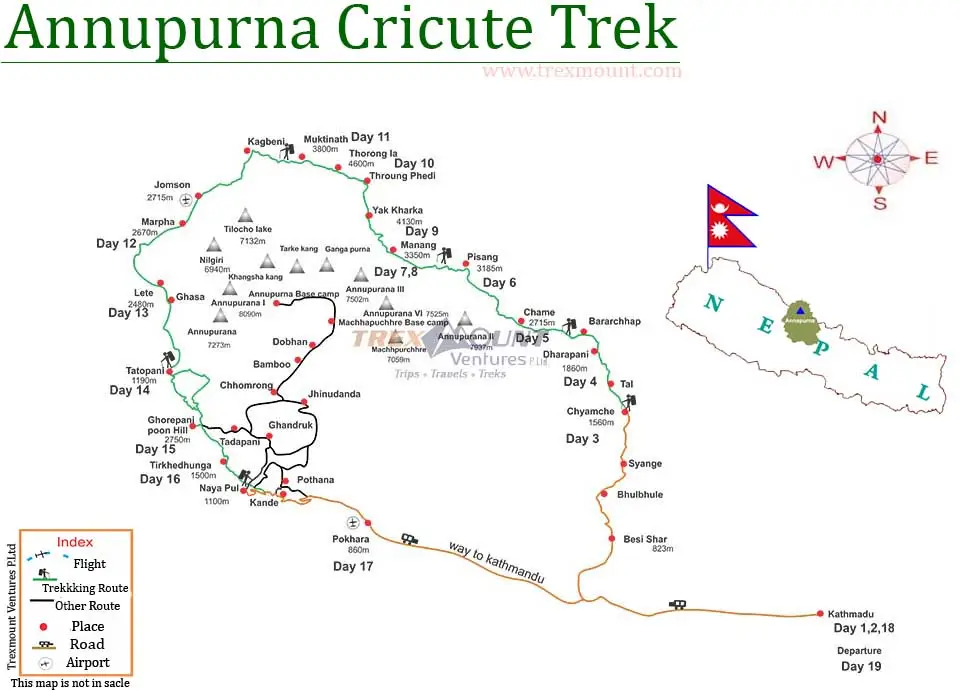
    Annapurna Circuit Trekking Map
    Annapurna Circuit Trek Altitude Profile
    Annapurna Circuit Trek Cost
    How Much Does It Cost to Climb Annapurna in Rupees?
    How Difficult Is the Annapurna Circuit Trek?
    Can a Beginner Climb Annapurna I?
    Annapurna Circuit Trek Booking Guide

What Is the 15-Day Annapurna Circuit?

The Annapurna circuit trek 15-day version is the most commonly chosen itinerary by trekkers who want to complete the full loop without unnecessary delays. Starting from Besisahar and ending at Nayapul or Pokhara, this itinerary covers all the major highlights, including Manang, Thorong La Pass, Muktinath, and the Kali Gandaki Gorge. It balances daily walking hours, acclimatization stops, and cultural visits efficiently.

The 15-day plan suits trekkers with moderate to good fitness who can handle 5 to 7 hours of walking per day. It includes one full rest and acclimatization day in Manang, which is non-negotiable for safety above 3,500 meters. Compared to shorter versions, the 15-day format allows you to absorb the landscape changes fully rather than rushing through them.

Annapurna Circuit Trekking Map

The Annapurna Circuit trekking map covers a circular route through the Annapurna Conservation Area, spanning parts of Gandaki Province in central Nepal. Understanding the map is important before booking because it helps you visualize elevation gain, identify acclimatization stops, and plan side trips.

The total Annapurna Circuit Trek km distance ranges between 160 and 230 km, depending on the starting point and optional detours. Trekkers who start from Besisahar and include the Tilicho Lake side trip typically cover closer to 220–230 km in total.

Key Landmarks on the Map

LandmarkAltitudeSignificance
Besisahar760mTrek starting point
Chame2,670mDistrict headquarters, permits checked
Upper Pisang3,300mFirst views of Annapurna II and IV
Manang3,519mMain acclimatization stop
Tilicho Lake (Side Trip)4,919mOne of the world’s highest lakes
Thorong La Pass5,416mThe highest point of the circuit
Muktinath Temple3,710mSacred Hindu and Buddhist pilgrimage site
Kagbeni2,810mGateway to Upper Mustang
Tatopani1,190mFamous for natural hot springs
Poon Hill3,210mIconic sunrise mountain viewpoint

Annapurna Circuit Trek Altitude Profile

The Annapurna Circuit trek altitude follows a classic ascend-and-descend pattern that takes trekkers from 760 meters all the way to 5,416 meters at Thorong La Pass before descending to Pokhara at roughly 800 meters. This wide altitude range is one reason the trek delivers such diverse landscapes and why acclimatization is taken so seriously.

Above 3,000 meters, the body needs time to adapt to lower oxygen levels. Symptoms of AMS include headache, nausea, fatigue, and dizziness. The itinerary is specifically designed to ascend gradually, but every trekker responds differently to altitude, and no level of fitness guarantees immunity.

Altitude Stages at a Glance

  • 760m–1,860m: Subtropical zone, warm and humid, dense forest
    1,860m–3,519m: Temperate to alpine transition, pine and oak forest
    3,519m–4,450m: High alpine zone, sparse vegetation, cold nights
    4,450m–5,416m: Arctic-like conditions, snow and ice possible year-round
    5,416m–1,190m: Rapid descent into the Kali Gandaki rain shadow valley

Annapurna Circuit Trek Cost

The Annapurna circuit trek cost depends on several factors, including trekking style, group size, duration, and whether you hire a guide and porter. Below is a transparent breakdown so you can plan your budget accurately.

Permit Costs

PermitCost (Approx.)
Annapurna Conservation Area Permit (ACAP)NPR 3,000 (approx. USD 22)
TIMS Card (Trekkers’ Information Management System)NPR 3,000 (approx. USD 23)

Daily Expenses on the Trail

Expense CategoryBudget (Per Day)Mid-Range (Per Day)
Teahouse accommodationUSD 10–25USD 30–60
Meals (3 per day)USD 15–25USD 25–50
Snacks and hot drinksUSD 5–10USD 10–20
Total per dayUSD 30–60USD 65–100

Guide and Porter Fees

  • Licensed trekking guide: USD 25–35 per day
    Porter: USD 18–25 per day
    Porter-guide (combined): USD 28–35 per day

For a 15-day guided Annapurna Circuit Trek, the total all-inclusive package cost from Trexmount Ventures typically ranges between USD 900 and USD 1,500 per person, depending on group size and services included. This covers permits, accommodation, meals, guide, porter, and transport.

How Much Does It Cost to Climb Annapurna in Rupees?

The Annapurna Circuit Trek as a trekking route costs approximately NPR 120,000 to NPR 200,000 (around USD 900–1,500) for a fully guided 15-day package per person. This includes all permits, transport, accommodation, meals, and staff fees.

It is important to distinguish between trekking the Annapurna Circuit and actually climbing Annapurna I (8,091m), which is a high-altitude mountaineering expedition. The cost to climb Annapurna I as a peak expedition is far higher, often ranging between USD 25,000 and USD 70,000 per person, including the government royalty fee alone of USD 8,000 per climber for a team of up to seven members (as per Nepal Mountaineering Association rates).

For the trekking route specifically, independent trekkers with minimal extras can complete the circuit for as low as NPR 80,000–100,000, while comfort-focused trekkers with guides and private rooms spend upward of NPR 200,000 or more.

How Difficult Is the Annapurna Circuit Trek?

The Annapurna Circuit Trek is rated moderately to highly challenging. It does not require technical climbing skills or prior mountaineering experience, but it demands consistent physical endurance over 15 days. The biggest challenge is not any single day but the accumulated fatigue combined with altitude stress.

The hardest day is the Thorong La Pass crossing on Day 11. Trekkers gain over 1,000 meters of elevation before descending more than 1,600 meters on the same day, covering roughly 15–20 km. Starting at 3:00–4:00 AM in freezing temperatures while managing altitude-related breathlessness makes this a genuinely demanding physical effort.

Difficulty Factors at a Glance

FactorDetails
Maximum altitude5,416m (Thorong La Pass)
Daily walking hours4–8 hours
Total distance160–230 km
Technical skills neededNone
Physical fitness requiredModerate to high
Risk of altitude sicknessModerate to high above 3,500m

Can a Beginner Climb Annapurna I?

No. Annapurna I (8,091m) is one of the deadliest mountains in the world with a historical fatality rate of over 30%, which is among the highest of all 8,000-meter peaks. It is strictly an expert-level mountaineering expedition requiring years of high-altitude climbing experience, advanced technical skills, and specialized equipment.

The Annapurna Circuit Trek, however, is accessible to beginners with proper preparation. Trekking the circuit does not involve climbing Annapurna I and only passes through the region surrounding the massif. A fit beginner who trains consistently for 2–3 months before the trek and follows the acclimatization schedule can successfully complete the 15-day circuit.

Annapurna Circuit Trek Booking Guide

Annapurna Circuit trek booking is straightforward and can be done well in advance or even a few weeks before departure. However, booking 2–3 months ahead is recommended for autumn (September–November) travel since this is the peak trekking season in Nepal.

What to Check Before Booking

  • Verify that your trekking company is registered with the Nepal Tourism Board
    Confirm that the package includes ACAP and TIMS permits
    Check whether the guide is licensed by the Nepal Government
    Clarify the cancellation and refund policy in writing
    Ensure travel insurance covering high-altitude trekking and emergency evacuation is in place

Trexmount Ventures handles all permits, logistics, licensed guides, and porter arrangements as part of our Annapurna Circuit trek 15-day packages. We customize itineraries based on your fitness level, group size, and preferred pace.

Ready to Trek the Annapurna Circuit with Trexmount Ventures?

If you are planning your Annapurna Circuit Trek and want a reliable, experienced local team to handle every detail, Trexmount Ventures is here to help. We are a Nepal-based trekking and tours company offering fully customizable 15-day Annapurna Circuit packages with licensed guides, transparent pricing, and personalized support from start to finish. Whether you are a first-time trekker or returning to Nepal for another adventure, we build itineraries that match your pace, budget, and goals.

Contact our team today to get your custom quote, confirm your dates, and take the first step toward one of the world’s greatest treks.

Package options

Select Package Type

★ ★ ★ ★ ★

Standard Package Price

US $1350

per traveller

Standard Package Included

  • Two nights of hotel accommodation at Kathmandu on a BB-sharing basis.
  • Land transfer by private vehicle to Kathmandu- Besishahar-Kathmandu.
  • All Airport transfer
  • Accommodation on a full board-sharing basis during the trek.
  • Three meals (breakfast, lunch, and dinner) during the trek.
  • One Porter for 2 people.
  • One highly experienced English-speaking male guide.
  • ACAP entry permits fee
  • All forms of Government taxes.
  • Trekking Certificate

Standard Package Excluded

  • All the personal expenses, phone call bills, internet bills, travel insurance, beverage bills, bar bills, laundry, water, travel insurance, and heater during the trek.
  • Gratuity for the Guide, Drives, and Porter.
  • Personal Trekking equipment, rescue operation in case of emergency.
  • In case of any emergency Helicopter rescue.
  • All the expenses that arise due to a change of itinerary because of the strike, lockdown landslide, political trouble, or any other obstacles.
  • All the Lunches and Dinners in Kathmandu and Pokhara

Trip Itinerary

Upon arrival at Tribhuvan International Airport in Kathmandu, our representative will warmly welcome you and assist with your transfer to the hotel. After check-in, you can refresh and relax following your journey. Later in the day, our tour leader will conduct a pre-departure briefing at the hotel, covering important trek-related information, safety guidelines, and itinerary details. During the meeting, we will also collect necessary documents, including passport copies, passport-sized photographs, and travel insurance details.

Accommodation

Hotel in Kathmandu

Meal

N/A

Time

N/A

Distance

N/A

After breakfast, the day is reserved for trek preparation and personal activities. You may use this time to organize trekking gear, purchase last-minute essentials, or simply rest. Alternatively, you can opt for a guided sightseeing tour of Kathmandu Valley, home to several UNESCO World Heritage Sites. Popular visits include Pashupatinath Temple, Boudhanath Stupa, Swayambhunath (Monkey Temple), and the historic Durbar Squares of Kathmandu, Patan, or Bhaktapur. This optional tour can be arranged locally based on your interests.

Accommodation

Hotel in Kathmandu

Meal

Breakfast

Time

N/A

Distance

N/A

We begin our journey early with a scenic drive from Kathmandu toward the Annapurna region. The drive follows the busy Kathmandu–Pokhara highway until Dumre, then diverts toward Besisahar, the administrative center of Lamjung District. From here, the road becomes rougher as we follow the Marsyangdi River upstream, passing villages such as Khudi, Bhulbhule, and Dharapani. Terraced fields, waterfalls, and green valleys dominate the scenery before the road climbs to Chame, where we stay overnight.

Accommodation

Standard Hotels

Meal

Breakfast, Lunch, Dinner

Time

9-10 Hours

Distance

~240 km

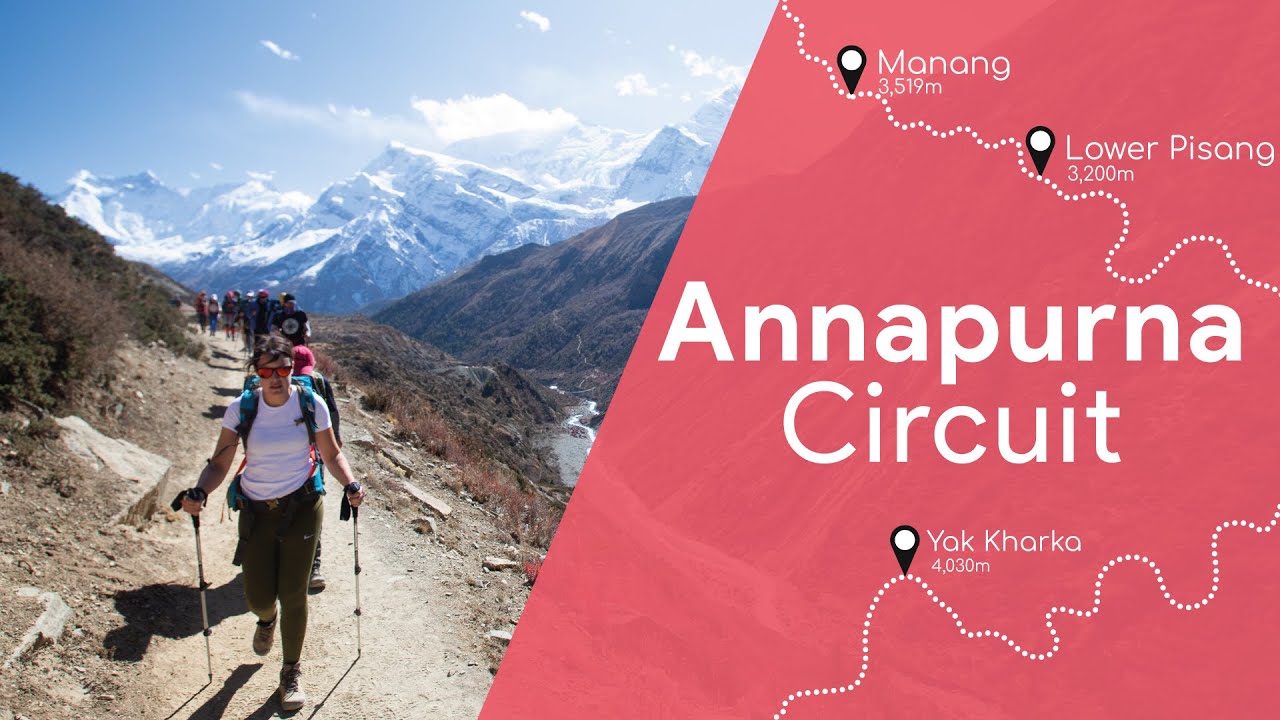
The trail today follows the Marsyangdi River through dense pine forests, passing the village of Bhratang. We gradually ascend to Dhukure Pokhari, a scenic viewpoint with stunning views of Pisang Peak and the Chulu range. From here, a gentle descent leads to Lower Pisang, a traditional village surrounded by dramatic rock formations and snow-capped peaks.

Accommodation

Tea Houses

Meal

Breakfast, Lunch, Dinner

Time

~5 hours

Distance

~13 km

We start the day with spectacular views of Annapurna II’s north face before ascending along a ridge trail through pine forests. This section offers panoramic views of the entire Manang Valley. Descending toward Hongde, we pass a small airstrip before continuing across dry, open terrain toward Braga village. A visit to Braga Monastery, one of the oldest in the region, provides insight into Tibetan Buddhist culture. From here, we continue to Manang village, set beneath Gangapurna and Tilicho Peak.

Accommodation

Standard Hotels

Meal

Breakfast, Lunch, Dinner

Time

~5 hours

Distance

~15 km

Today is dedicated to acclimatization, essential for adjusting to the altitude. We take a short hike to Gangapurna Glacier and Manang Lake, enjoying views of the surrounding peaks while helping our bodies adapt. The afternoon is free to explore Manang village, visit bakeries, or attend altitude awareness talks offered locally.

Accommodation

Standard Hotels

Meal

Breakfast, Lunch, Dinner

Time

N/A

Distance

N/A

Leaving Manang, we ascend gradually past Tenki village into open alpine terrain. The landscape becomes increasingly barren as vegetation thins. We pass Ghunsang village and continue along a gentle climb with sweeping views of Gangapurna, Tilicho Peak, and Chulu West. Yak Kharka, a high pastureland used for grazing yaks, provides a peaceful overnight stop.

Accommodation

Tea Houses

Meal

Breakfast, Lunch, Dinner

Time

~4 hours

Distance

~10 km

The trail continues steadily upward, crossing a suspension bridge near Ledar and climbing toward Thorong Phedi, the base of Thorong La Pass. Wildlife sightings such as blue sheep or Himalayan thar are possible along this stretch. After a rest at Thorong Phedi, a steep ascent brings us to Thorong High Camp, offering dramatic mountain views and preparing us for the pass crossing.

Accommodation

Tea Houses

Meal

Breakfast, Lunch, Dinner

Time

~4 hours

Distance

~7 km

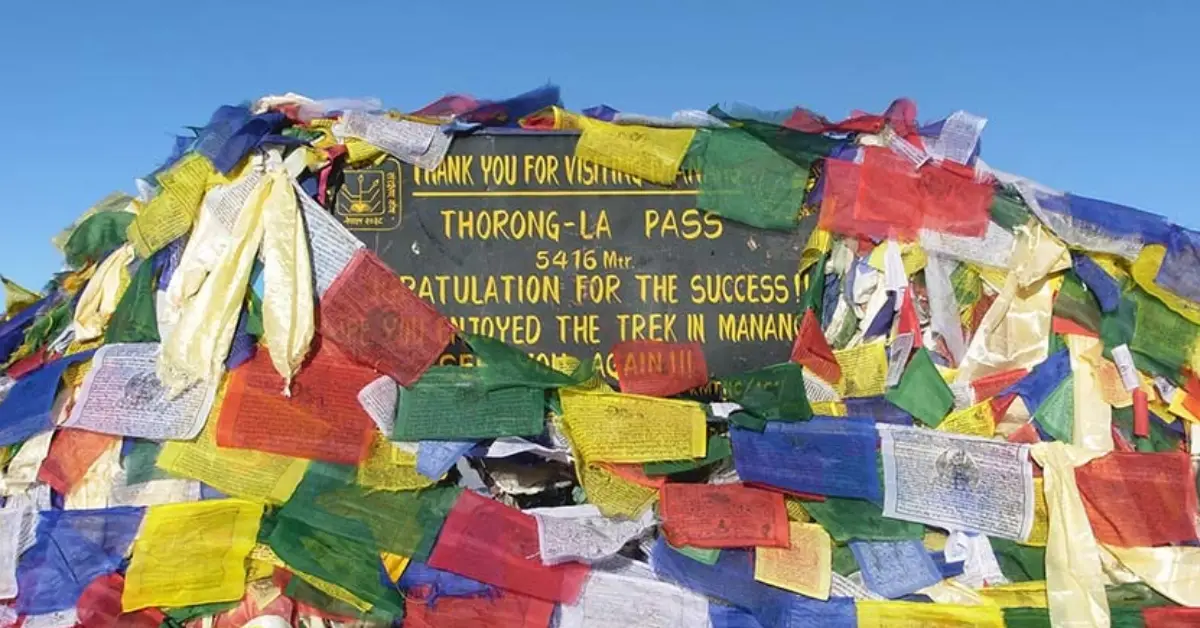
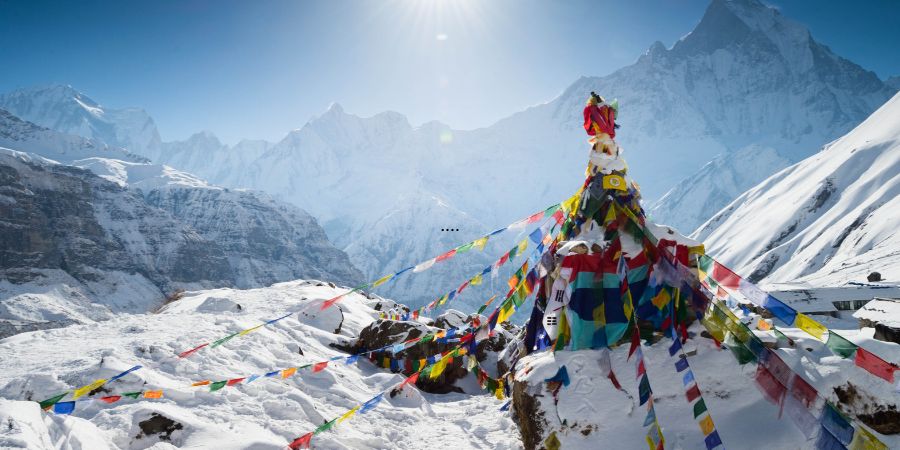
An early start is essential for today’s challenging but rewarding journey. We ascend gradually to Thorong La Pass (5,416 m), adorned with prayer flags and offering breathtaking views of Dhaulagiri, Mustang Himal, and the surrounding ranges. After celebrating the achievement, we descend steeply to the western side of the pass, stopping for rest and lunch before continuing to Muktinath, a sacred pilgrimage site revered by both Hindus and Buddhists.

Accommodation

Tea Houses

Meal

Breakfast, Lunch, Dinner

Time

~7 hours

Distance

~15 km

The landscape shifts dramatically as we descend into warmer subtropical zones. Driving through Jomsom, Marpha, Ghasa village, and fertile farmlands, we follow the Kali Gandaki through the world’s deepest gorge. Reaching Tatopani, we relax in the natural hot springs beside the river, a perfect reward after days of high-altitude trekking.

Accommodation

Standard Hotels

Meal

Breakfast, Lunch, Dinner

Time

~3-4 Hours

Distance

~70 km Drive

Today features a challenging ascent as we leave the river valley and climb through terraced fields to Ghara village. The trail continues through dense rhododendron and pine forests to Chitre and finally Ghorepani, a historic village on the old trans-Himalayan salt trade route, known for its stunning mountain views.

Accommodation

Standard Hotels

Meal

Breakfast, Lunch, Dinner

Time

~ 7 hours

Distance

~17 km

You start trekking early the morning, as you take a 45-minute hike up to Pun Hill (3195 meters). Pun Hill is known as one of the best places to see the panoramic views of the Annapurna region and offers a brilliant spectacle. This vantage point provides an unobstructed view of sunrise over the mountains. You will be able to see many mountains together with the three highest above 8000 meters (Annapurna I, Dhaulagiri I and Manaslu). You then return to Ghorepani, have breakfast and then trek to Tadapani. From Ghorepani, the trail climbs along ridges and through pine and rhododendron forests to Deurali (2960 meters). You descend to reach Banthanti, then wind your way to Tadapani (2630 meters) through the jungle.

Accommodation

Standard Hotels

Meal

Breakfast, Lunch, Dinner

Time

~5 hours

Distance

~11 km

Our final walk descends gently to GHandruk village, which is one of the beautiful villages in the region. See the lovely high-cap mountains and hike along the Modi River through Bhirethanti. From here, we drive to Pokhara, a scenic lakeside city. The afternoon is free to relax by Phewa Lake, explore Lakeside, or enjoy views of the Annapurna range

Accommodation

Hotel in Pokhara

Meal

Breakfast, Lunch

Time

~5 hours

Distance

41.7 km Drive

After breakfast, we return to Kathmandu by scenic drive through river valleys and hills. Alternatively, you may choose a short domestic flight offering aerial views of the Himalayas. Upon arrival in Kathmandu, we transfer you to your hotel, and you can enjoy free time by yourself.

Accommodation

Hotel in Kathmandu

Meal

Breakfast

Time

N/A

Distance

N/A

After breakfast, our representative will transfer you to Tribhuvan International Airport for your onward journey, marking the end of an unforgettable Annapurna Circuit adventure.

Accommodation

N/A

Meal

Breakfast

Time

N/A

Distance

N/A

Route Map

trip route map for Annapurna Circuit Trek

Fixed Departure

Date Aug 10 - Aug 29
Cost $ 1,235
Group 20 pax
Status Available
Book Now
Date Aug 11 - Aug 30
Cost $ 1,234
Group 10 pax
Status Available
Book Now
Date Jun 30 - Jul 19
Cost $ 1,235
Group 20 pax
Status Available
Book Now

Frequently Asked Questions

The Annapurna Circuit Trek km distance ranges from 160 to 230 km depending on your starting point and side trips. The standard route from Besisahar to Nayapul covers roughly 160–180 km. Including optional detours like Tilicho Lake or Ice Lake adds 20–40 km more to the total distance.

Yes, the trek is safe when done with proper preparation, acclimatization, and ideally a licensed guide. The main risks are altitude sickness above 3,500 meters and unpredictable weather near Thorong La Pass. Trekkers should carry a basic first aid kit, know AMS symptoms, and never ascend if feeling unwell.

October and November are the best months due to stable weather, clear mountain views, and ideal conditions for crossing Thorong La Pass. March to May (spring) is the second-best season with blooming rhododendrons and good visibility. Monsoon (June–August) brings heavy rain, and winter (December–February) brings deep snow at the pass.

As of the latest Nepal government regulations, solo trekking in the Annapurna Conservation Area requires a licensed guide. Aside from the legal requirement, a guide significantly improves safety, especially for first-time trekkers managing altitude challenges and navigating trail junctions.

Teahouses along the Annapurna Circuit serve dal bhat, noodles, pasta, fried rice, soups, porridge, eggs, and seasonal vegetables. Dal bhat is the most recommended meal as it is the most filling, affordable, and nutritious option for long trekking days. Food variety reduces as you gain altitude.

At Thorong La Pass (5,416m), temperatures can drop to -15°C or lower during early mornings and winter months. Even in October and November, temperatures at the pass before sunrise frequently fall below -10°C. Layering with a down jacket, thermal base layers, gloves, and a warm hat is essential.

Yes, but preparation matters. First-time trekkers should build cardiovascular endurance with regular hiking, running, or cycling for at least 2–3 months beforehand. Walking 5–7 hours daily for 15 consecutive days at high altitude is the core challenge, and leg strength combined with mental stamina is just as important as fitness.

Altitude sickness is a real and common risk above 3,500 meters on this route. Studies suggest that roughly 30–40% of trekkers experience mild AMS symptoms above Manang. Proper acclimatization, slow ascent, staying hydrated, and avoiding alcohol significantly reduce risk. Diamox (acetazolamide) is sometimes used but should only be taken after consulting a doctor.

Two permits are required: the Annapurna Conservation Area Permit (ACAP) and the TIMS card. ACAP costs NPR 3,000 and TIMS costs NPR 2,000. Both can be obtained in Kathmandu at the Nepal Tourism Board office or in Pokhara before starting the trek. Guides can also assist with obtaining permits.

The Annapurna Circuit Trek is a longer, more diverse route that circles the entire massif over 15–20 days, crossing Thorong La Pass at 5,416m. The Annapurna Base Camp (ABC) Trek is shorter, typically 10–13 days, leading directly to the base camp at 4,130m. The Circuit is more culturally and geographically diverse, while ABC offers a more intimate view of the Annapurna Sanctuary.

Package Video

Video Thumbnail

Traveler Reviews

Verified customer feedback

DA

Dhiraj Ale Magar

Apr 26, 2026

"Multiple Images"

Review photo Review photo Review photo

Related Packages

You May Also Love And Like
Annapurna Circuit Trek
(5.0) 16
Annupurna Region
15 Days
Max 30 People
Starts From $1350
Annapurna Base Camp Trek
(5.0) 11
Annupurna Region
16 Days
Max 12 People
Starts From $1380
Ghorepani Poon Hill Trek
(5.0) 18
Annupurna Region
10 Days
Max 50 People
Starts From $938
Mt Annapurna Expedition
(5.0) 12
Annupurna Region
54 Days
Max 12 People
Starts From $18500