
Overview
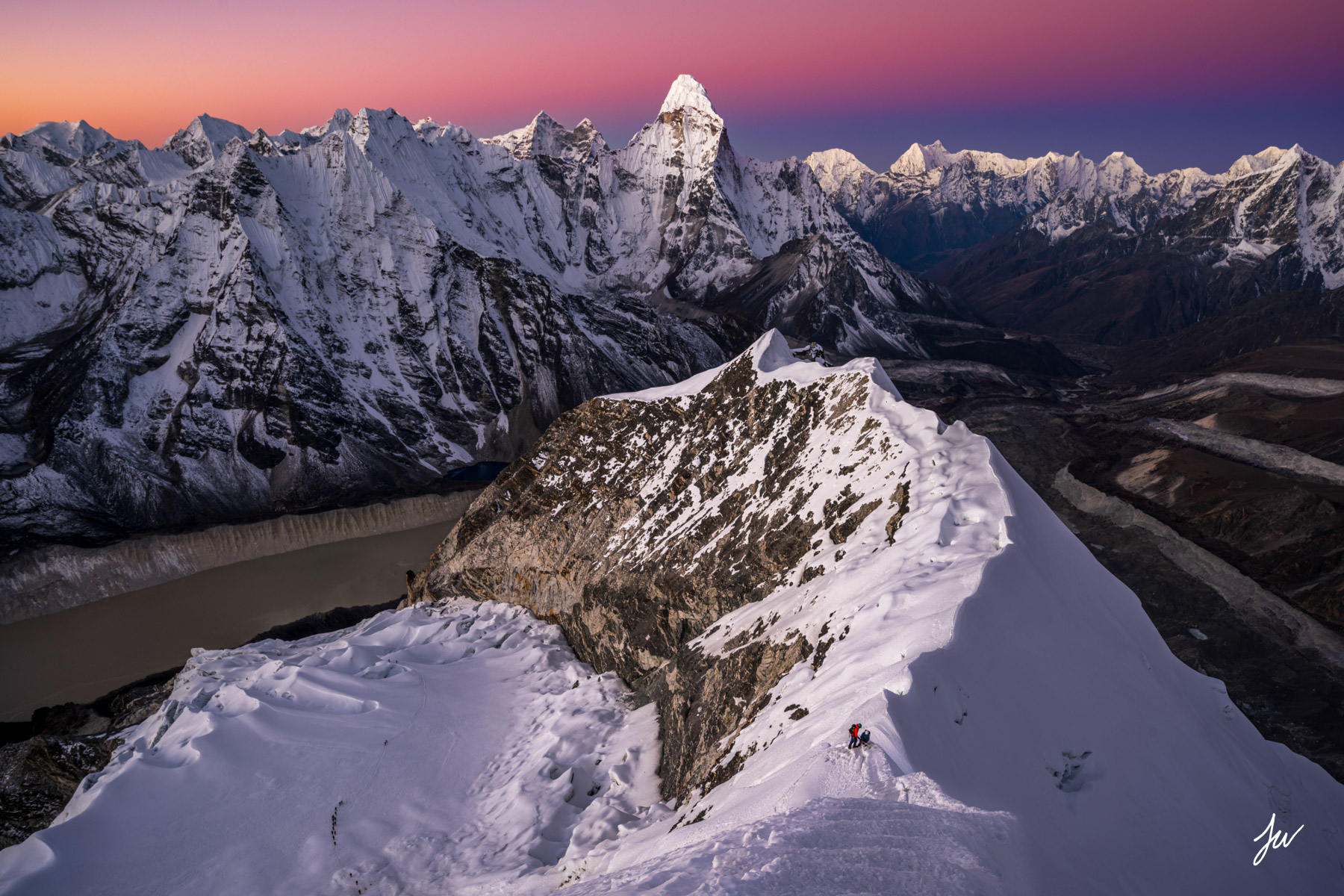
If you have ever dreamed of standing on top of a Himalayan peak with the world’s highest mountains all around you, then Island Peak climbing in Nepal is exactly what you are looking for. Island Peak, also known as Imja Tse, rises to an altitude of 6,189 meters above sea level. It sits in the heart of the Everest region, and from a distance, it looks like a lone island floating above a sea of glaciers, that is exactly how it got its name.
This guide is brought to you by Trexmount Ventures, one of the Best trekking companies in Nepal, and it covers everything you need to know, from the 19-day itinerary and climbing difficulty to permits, preparation, and the best time to go. Whether you are a first-time climber or an experienced trekker ready to level up, this guide has you covered.
1. What Is Island Peak?
Island Peak climbing in Nepal takes you into one of the most breathtaking regions on Earth, the Khumbu Valley of the Everest region. Island Peak (Imja Tse) was first climbed in 1953 by a British expedition team and has since become one of the most popular trekking peaks in all of Nepal.
Why Is It Called Island Peak?
- Eric Shipton, a famous British mountaineer, named it “Island Peak” in 1952.
- When viewed from Dingboche village, the peak appears to rise like an island above a frozen sea of glaciers.
- It was officially renamed Imja Tse by the Nepal government, but most climbers still call it Island Peak.
| Feature | Details |
|---|---|
| Official Name | Imja Tse |
| Popular Name | Island Peak |
| Altitude | 6,189 meters (20,305 feet) |
| Location | Khumbu, Solukhumbu District |
| First Ascent | 1953, British Expedition |
| Peak Category | Trekking Peak (Nepal Mountaineering Association) |
| Region | Everest Region Peak Climbing Zone |
What Makes It Special?
Island Peak is special because it gives you a real Island Peak summit Nepal experience without requiring years of professional mountaineering training. The views from the top include Lhotse, Makalu, Baruntse, and Ama Dablam, a panorama that very few places on Earth can match.
2. Island Peak Climbing Difficulty
Understanding Island Peak climbing difficulty is the first step to preparing well. The climb is rated as a moderate-to-challenging trekking peak. It is not the easiest mountain in the world, but it is absolutely doable with the right preparation and guidance.
Difficulty Breakdown
| Difficulty Factor | Rating | Notes |
|---|---|---|
| Physical Demand | Moderate–High | Long summit day, 10–14 hours |
| Technical Skills | Moderate | Crampons, ice axe, fixed ropes |
| Altitude | High | 6,189 m causes altitude sickness |
| Mental Strength | High | Required for summit push |
| Overall Grade | PD (Peu Difficile) | Alpine climbing standard |
What Makes It Challenging?
- Altitude: The biggest enemy on the Island Peak climb is thin air. Above 5,500 meters, oxygen levels drop significantly.
- Crevasses: The glacier route has hidden crevasses, especially between Camp 1 and the summit.
- Steep Headwall: A near-vertical 50–60° ice headwall guards the summit ridge. Fixed ropes help, but it still demands effort.
- Long Summit Day: You start at midnight and may not return to base camp until evening.
Compared to Other Peaks
Island Peak climbing is considered harder than Mera Peak (6,476 m, but non-technical) and easier than Ama Dablam (6,812 m, technically demanding). It is the sweet spot for climbers stepping up from trekking to actual mountaineering.
3. Is Climbing Island Peak Difficult?
This is the most common question asked by aspiring climbers, and the honest answer is: it depends on your fitness and preparation.
Factors That Determine Difficulty for You
| Your Background | Expected Experience |
|---|---|
| Experienced trekker (5,000+ m) | Manageable with training |
| Beginner trekker | Challenging but possible |
| Has used crampons/ice axe | Significantly easier |
| No prior high-altitude exposure | More difficult, needs preparation |
The Real Challenge Is in the Details
- The Imja Tse climbing guide approach teaches that the hardest part is not just the steep headwall, but the cumulative fatigue from days of trekking before you even attempt the summit.
- Proper Island Peak altitude and acclimatization rest days reduce the difficulty level enormously.
- With a qualified Island Peak climbing guide from Trexmount Ventures, success rates improve dramatically.
4. Can a Beginner Climb the Island Peak?
Yes, and this is one of the most exciting truths about Island Peak climbing in Nepal. Island Peak is widely regarded as one of the best beginner peak climbing options in Nepal.
What “Beginner” Means Here
| Beginner Profile | Suitable? | Notes |
|---|---|---|
| First-time climber with trekking experience | Yes | With proper training |
| No trekking experience at all | No | Must build base fitness first |
| Person who has trekked to EBC | Yes | Good candidate |
| Climber with no ice axe experience | Possible | Training included in package |
How Trexmount Ventures Helps Beginners
- Pre-climb training: Our Island Peak climbing preparation program includes acclimatization walks, crampon practice, and rope training.
- Experienced guides: Every client is paired with a certified Imja Tse climbing guide with 10+ summits.
- Slow itinerary: Our 19-day Island Peak climbing itinerary gives your body more time to adjust, making the climb safer and more enjoyable.
- Continuous support: Guides stay with you at every step, from Lukla to the Island Peak summit Nepal.
As the best trekking company in Nepal, Trexmount Ventures has helped hundreds of first-time climbers reach the summit safely.
5. Is Island Peak a Technical Climb?
This is another very important question. The short answer is yes, partially. Island Peak requires basic technical mountaineering skills, which sets it apart from ordinary trekking.
Technical Elements of the Climb
| Technical Skill | Required? | Difficulty Level |
|---|---|---|
| Crampon use | Yes, essential | Beginner–Intermediate |
| Ice axe arrest | Yes, essential | Beginner |
| Fixed rope ascending (jumar) | Yes | Beginner–Intermediate |
| Rappelling | Sometimes | Basic |
| Crevasse crossing | Yes | Guided |
What You Will Encounter
- Glacier travel: From base camp to the summit, you cross a glacier with crevasses. This requires a roped team travel.
- Ice headwall: The final headwall is the most technical section. It is steep and icy. Fixed ropes make it possible, but not easy.
- High altitude: Even technical skills become harder when you are gasping for air at 6,000+ meters.
However, the good news is that Island Peak climbing does not require prior technical mountaineering certification. A good Island Peak climbing package Nepal from Trexmount Ventures includes a full pre-climb technical training day at base camp.
6. How Long Does It Take to Climb Island Peak?
How long does it take to climb Island Peak? depends on which program you choose. The actual summit day is typically 10 to 14 hours, but the full expedition takes between 16 and 21 days.
Time Breakdown
| Phase | Duration |
|---|---|
| Travel to Lukla (fly from Kathmandu) | 1 day |
| Trek to Base Camp via EBC route | 8–10 days |
| Acclimatization and training at base camp | 1–2 days |
| Summit attempt (push to Camp 1 + summit) | 2 days |
| Return trek to Lukla | 3–4 days |
| Fly back to Kathmandu | 1 day |
| Total Duration | 16–21 days |
Summit Day Timeline
- Midnight: Wake up and prepare.
- 1:00 AM: Depart base camp or high camp.
- 6:00–9:00 AM: Reach the summit (timing depends on pace and conditions).
- Afternoon: Return to base camp.
- Evening: Rest and celebrate.
The Island Peak expedition Nepal is a complete adventure from the moment you land in Kathmandu to the moment you fly home.
7. Island Peak Trek Route and Trekking Route Map
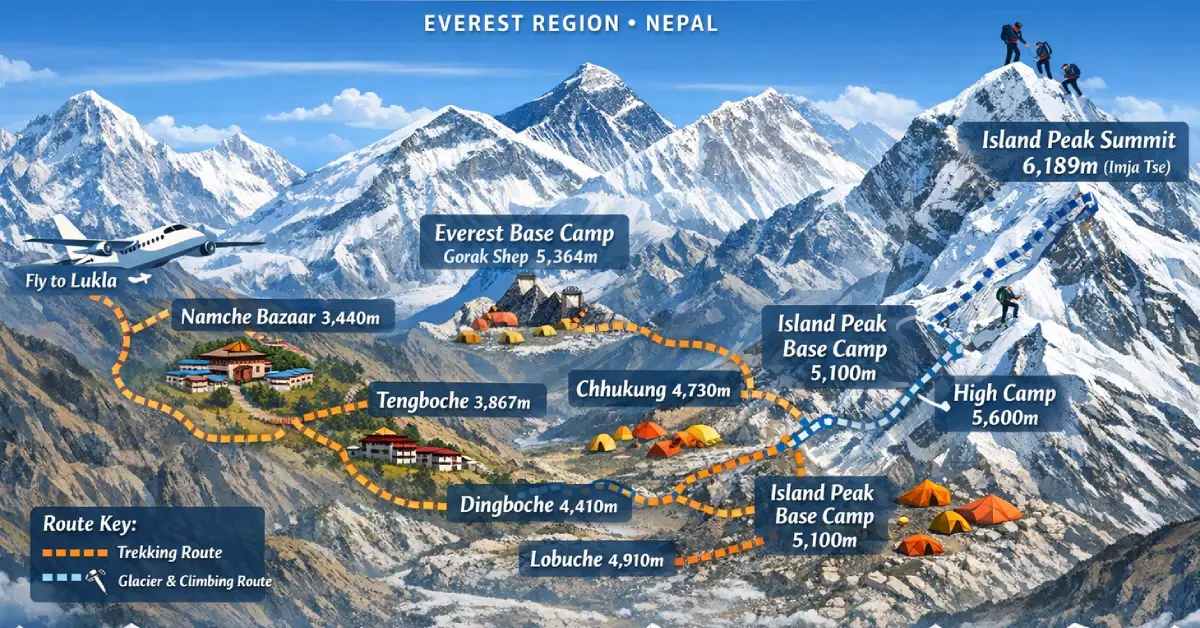
The Island Peak trek route follows the classic Everest Base Camp trail before branching off toward Chhukung and then Island Peak Base Camp. Understanding the Island Peak trekking route map helps you visualize the journey.
Route Overview
| Route Segment | Trail Type | Distance (approx.) |
|---|---|---|
| Lukla to Namche Bazaar | Forested, rocky trail | ~22 km |
| Namche to Tengboche | Moderate uphill, ridgeline | ~18 km |
| Tengboche to Dingboche | Valley floor, open terrain | ~20 km |
| Dingboche to Lobuche | High altitude, moraine | ~15 km |
| Lobuche to EBC (Gorak Shep) | Rocky moraine path | ~10 km |
| EBC to Chhukung (via Dingboche) | Return trail, valley route | ~22 km |
| Chhukung to Island Peak Base Camp | Rugged mountain trail | ~5 km |
| Base Camp to High Camp | Glacier approach | ~3 km |
| High Camp to Summit | Ice and rock | ~2 km |
Trail Features to Know
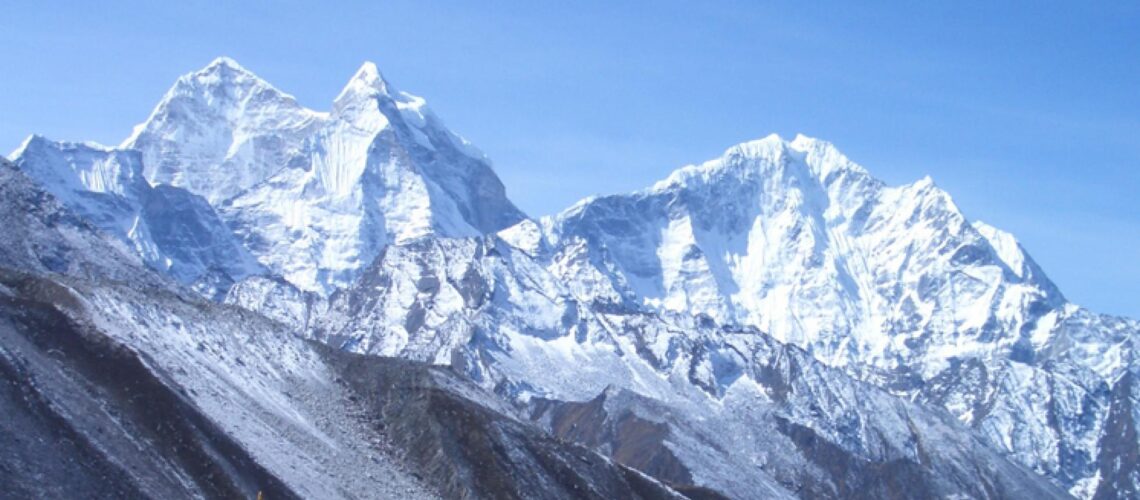
- The Everest region peak climbing trail offers views of Ama Dablam, Lhotse, and Makalu at almost every turn.
- The path between Dingboche and Chhukung is wide open, weather can change fast, so always carry warm layers.
- From Chhukung Ri (a short day hike near Chhukung), you get your first clear view of Island Peak in all its glory.
- The glacier section of the island peak climb requires roped travel and careful footwork.
8. Island Peak Altitude and Acclimatization
Island Peak altitude and acclimatization are perhaps the most critical parts of your entire expedition. The summit sits at 6,189 meters, which is high enough for serious altitude sickness to occur if your body is not properly adjusted.
Altitude Zones on the Route
| Zone | Altitude Range | Risk Level |
|---|---|---|
| Low altitude | Below 2,500 m | Low |
| Moderate altitude | 2,500–3,500 m | Low–Moderate |
| High altitude | 3,500–5,500 m | Moderate–High |
| Very high altitude | 5,500–6,200 m | High |
Acclimatization Tips for Island Peak
- Go slow: The golden rule of island peak climbing in Nepal is “climb high, sleep low.” Never skip a rest day.
- Stay hydrated: Drink at least 3–4 liters of water daily, especially above 4,000 meters.
- Recognize AMS: Acute Mountain Sickness (AMS) symptoms include headache, dizziness, nausea, and loss of appetite. Descend immediately if symptoms are severe.
- Use rest days wisely: On acclimatization days in Namche and Dingboche, do short uphill hikes to stimulate your red blood cell production.
- Avoid alcohol and sleeping pills: These reduce your body’s ability to adapt to altitude.
Trexmount Ventures, as the best trekking company in Nepal, schedules deliberate rest days throughout the Island Peak expedition experience to keep every climber safe and summit-ready.
9. Everest Base Camp and Island Peak Climb Combined
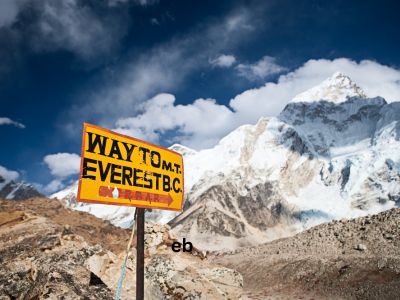
Combining the Everest base camp and Island Peak climb is the ultimate Himalayan adventure. You visit the legendary base camp of the world’s highest mountain AND summit a real Himalayan peak — all in one trip.
Why Combine EBC and Island Peak?
| Benefit | Details |
|---|---|
| Maximum value | Two iconic experiences in one journey |
| Better acclimatization | EBC trek prepares you for Island Peak altitude |
| Unforgettable memories | Stand at EBC and then on a 6,189 m summit |
| Logical route | EBC and Island Peak share the same approach trail |
What to Expect
- The route to Everest Base Camp takes you through Sherpa villages, rhododendron forests, and high-altitude deserts.
- After reaching EBC and Kala Patthar, you descend to Dingboche and then move toward Chhukung.\
- Island Peak climbing via Everest Base Camp adds only 3–4 extra days but doubles the achievement.
This combined Island Peak climbing package Nepal from Trexmount Ventures is our most popular offering and offers unmatched value as an Island Peak expedition experience.
10. Best Time for Island Peak Climbing
Choosing the best time for Island Peak climbing can make the difference between a successful summit and a forced turnaround. The weather in the Himalayas is powerful and unpredictable, so timing matters.
Seasonal Guide
| Season | Months | Conditions | Recommended? |
|---|---|---|---|
| Spring | March–May | Stable, warm, clear | Best |
| Summer/Monsoon | June–August | Heavy rain, poor visibility | Avoid |
| Autumn | September–November | Excellent, crisp, clear | Best |
| Winter | December–February | Very cold, snowbound | Advanced only |
Spring vs. Autumn
- Spring (March–May): This is the busiest season for island peak climbing. Days are long, temperatures are milder, and the mountain wildflowers of the lower Khumbu are absolutely stunning. The pre-monsoon window is perfect for summit attempts.
- Autumn (September–November): After the monsoon washes away the dust, the skies over the Everest region turn crystal clear. Visibility is incredible, and the air feels fresh. October is especially popular for Island Peak summit Nepal attempts.
Both seasons offer high summit success rates when planned with a reliable Island Peak climbing guide Nepal, like Trexmount Ventures.
11. Island Peak Permit Nepal, What You Need
Getting the right Island Peak permit Nepal is a mandatory part of your climb. You cannot legally attempt the summit without proper documentation. Trexmount Ventures handles all permits on your behalf.
Required Permits
| Permit Type | Issuing Authority | Valid For |
|---|---|---|
| Island Peak Climbing Permit | Nepal Mountaineering Association (NMA) | Island Peak summit attempt |
| Sagarmatha National Park Entry Permit | Department of National Parks | Khumbu region access |
| Khumbu Pasang Lhamu Rural Municipality Permit | Local Government | Khumbu entry |
| TIMS Card | Tourism Board / Trekking Agencies | All trekking in Nepal |
Important Notes on Permits
- The Island Peak permit Nepal is issued by the Nepal Mountaineering Association (NMA) in Kathmandu.
- Permit fees vary by season (spring is more expensive than autumn).
- Your Island Peak climbing guide in Nepal must also have a licensed guide certification from the NMA.
- Trexmount Ventures manages every document and submission, you just need to bring your passport.
12. Island Peak Climbing Preparation and Training Tips
Smart Island Peak climbing preparation is what separates successful summiteers from those who have to turn around. Start training at least 3–6 months before your departure date.
Physical Training Plan
| Training Area | Recommended Activity | Frequency |
|---|---|---|
| Cardiovascular endurance | Running, cycling, hiking | 5 days/week |
| Leg and core strength | Squats, lunges, planks | 3 days/week |
| Altitude pre-adaptation | High-altitude hikes (if possible) | Monthly |
| Balance and coordination | Step-ups, balance board | 3 days/week |
| Technical skills | Crampon/ice axe practice (if accessible) | Before departure |
Island Peak Training Tips
- Hike with a weighted pack: Load 10–15 kg and hike uphill for 4–6 hours. This directly mimics the island peak climb conditions.
- Build cardiovascular base first: Before working on strength, ensure you can run 5–10 km comfortably.
- Practice in cold weather: If you can, train in cold conditions to help your body adapt.
- Mental training matters too: Read summit stories, practice mindfulness, and visualize success on your Island Peak expedition in Nepal.
Gear Checklist Highlights
- Mountaineering boots (double boots preferred)
- Crampons (12-point, compatible with your boots)
- Ice axe (standard length)
- Harness and helmet
- Jumar ascender and belay device
- Down suit or high-altitude jacket
- Layered clothing system (base, mid, outer)
- Trekking poles
Trexmount Ventures provides a full detailed gear list as part of every Island Peak climbing package in Nepal.
13. Island Peak Climbing Guide Nepal
Choosing the right Island Peak climbing guide Nepal is arguably the single most important decision you will make for this expedition. The guide is not just a navigation tool, they are your safety net, motivator, medic, and friend.
What Makes Trexmount Ventures the Best Trekking Company in Nepal?
| Feature | Trexmount Ventures Advantage |
|---|---|
| Guide experience | 10+ summits per guide minimum |
| Certifications | NMA-licensed, wilderness first aid trained |
| Group size | Small groups for personalized support |
| Safety record | Zero major accidents in Island Peak expeditions |
| Acclimatization planning | Custom itineraries for each client |
| 24/7 support | Always reachable during the expedition |
Our Island Peak Expedition Experience
- Every trekking and climbing Island Peak guide on our team is a local Sherpa or high-altitude professional with deep knowledge of the Khumbu region.
- We provide pre-departure briefings, gear checks, and a detailed Island Peak climbing preparation plan.
- Our Island Peak expedition experience includes cultural immersion, visits to monasteries, Sherpa villages, and local teahouses.
- We limit group sizes to ensure every climber gets the attention they deserve on summit day.
 Review us on Google