 Trexmount Ventures
Trexmount Ventures
Trexmount Ventures
Popular Searches
Ready to plan your next getaway? Let’s connect and create something incredible together.
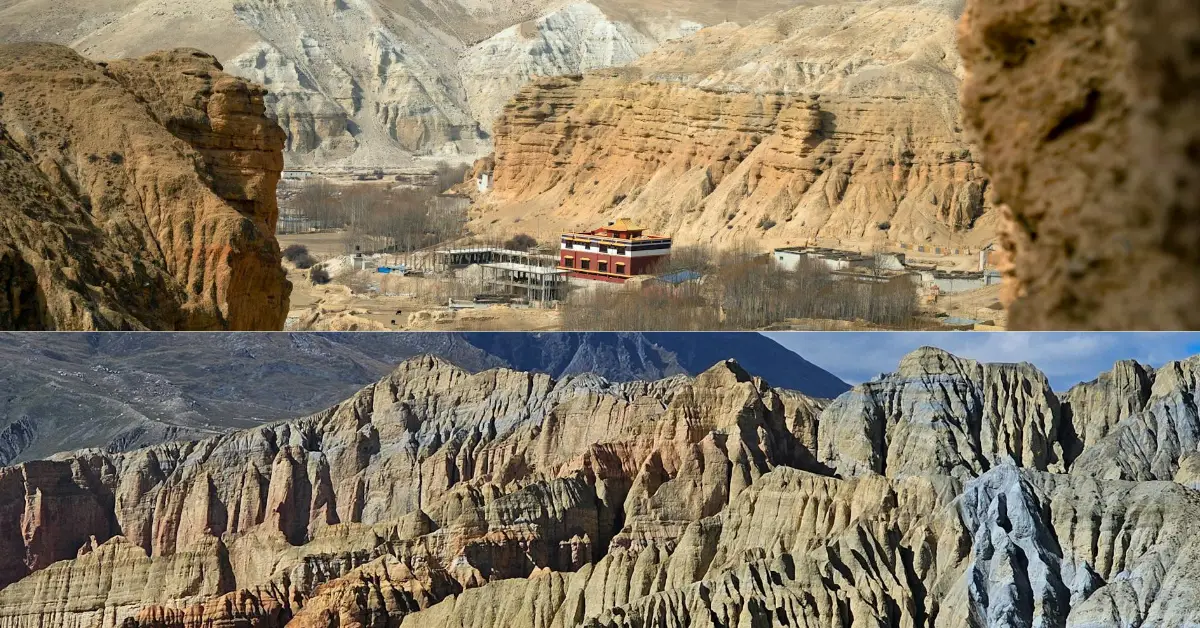
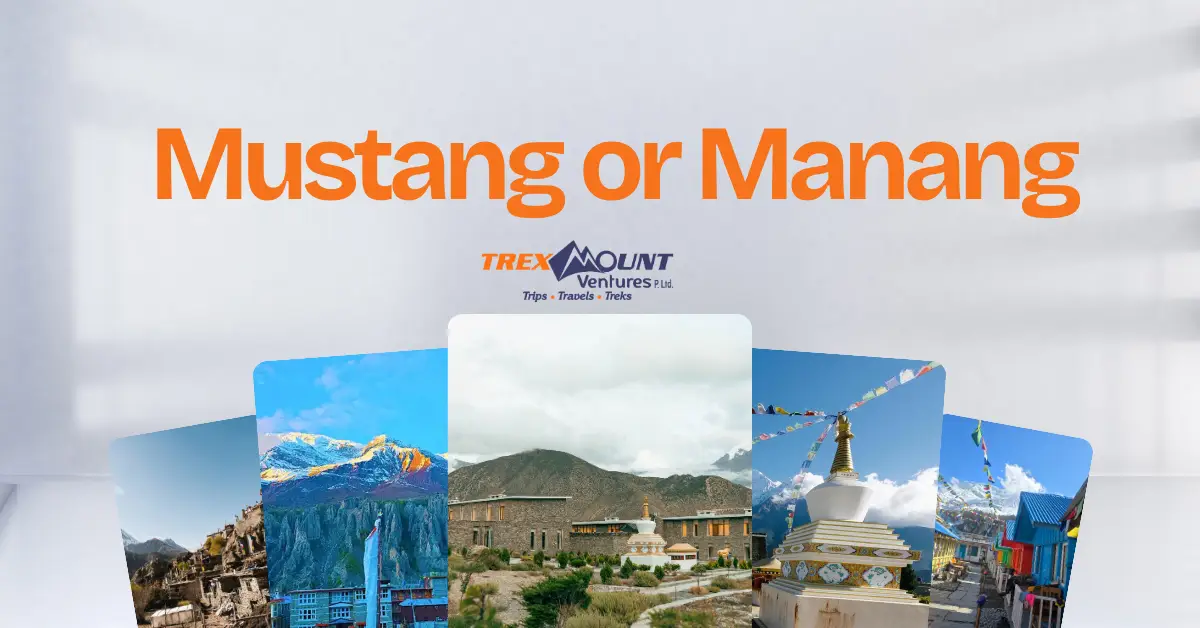
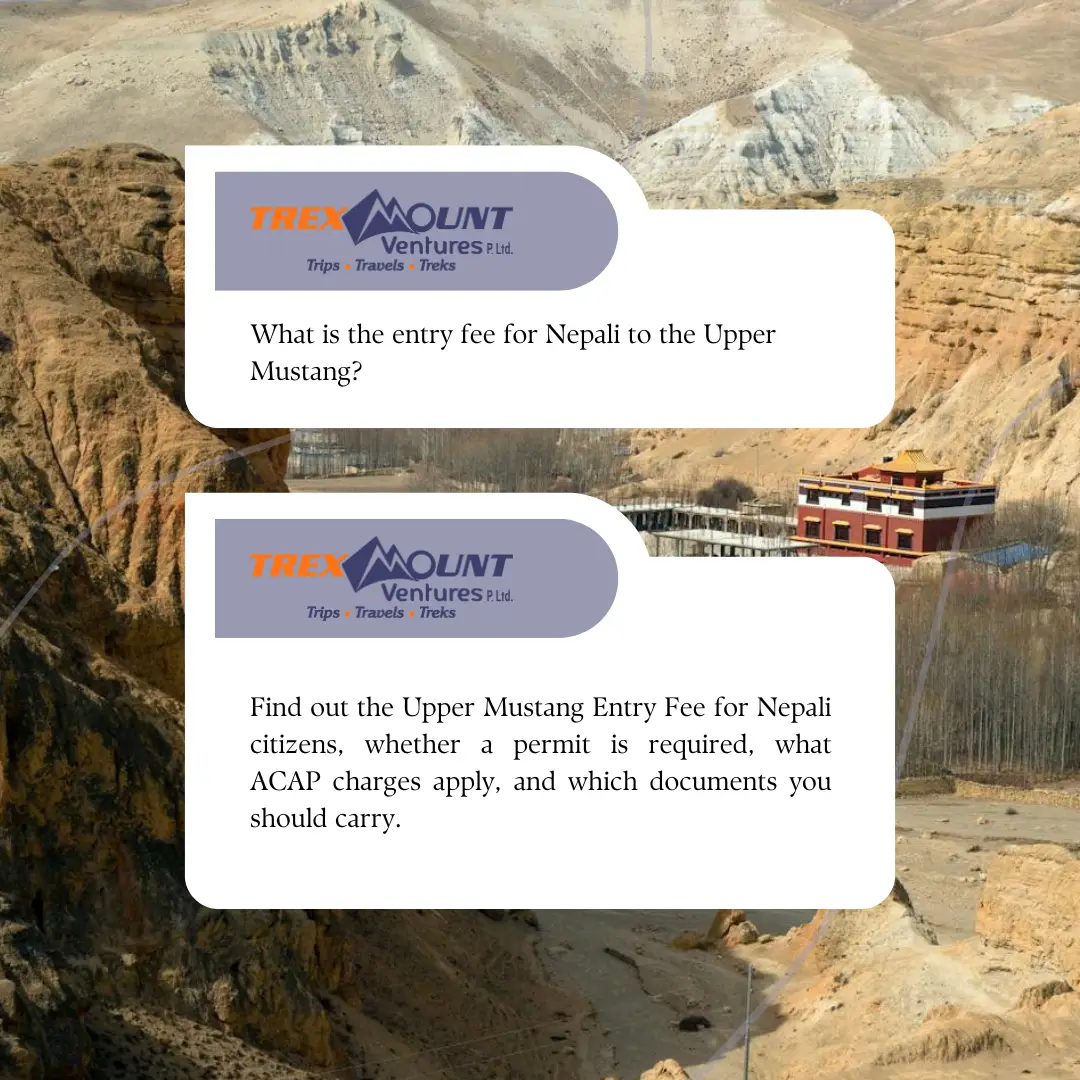
Upper Mustang is one of Nepal's most distinctive travel destinations, known for its high-altitude desert landscape, ancient monasteries, traditional Tibetan-influenced villages, caves, cliffs, and the historic walled city of Lo Manthang. Because the region has historically been classified as a restricted area, questions about permits and entry fees are common among Nepali travellers.
So, what is the entry fee for Nepali to the Upper Mustang?
The most important point is that Nepali citizens are not required to pay the foreign Upper Mustang Restricted Area Permit fee. The Nepal Tourism Board currently lists the Upper Mustang restricted-area trekking permit at USD 50 per person per day, while the Department of Immigration describes the restricted-area trekking permit requirement as applying to foreign tourists.
This means Nepali travellers should not confuse the foreign Upper Mustang Permit Fee with other possible conservation-area or local entry charges.
For the restricted-area permit, Nepali citizens are treated differently from foreign travellers.
The Department of Immigration's current information states that foreign tourists travelling to Nepal's designated restricted areas must obtain a trekking permit. Its current service information specifically identifies the Upper Mustang and Upper Dolpa restricted-area permit as a service for foreign visitors.
Therefore, Nepali citizens do not have to pay the USD 50-per-day foreign Upper Mustang Entry Fee for the restricted-area permit.
In simple terms:
This distinction is particularly important because the phrase "Upper Mustang entry fee" is often used loosely to describe several different charges.
There is no foreign restricted-area permit fee payable by Nepali citizens for entering Upper Mustang.
The current Nepal Tourism Board trekking-permit information lists Upper Mustang at USD 50 or equivalent convertible currency per person per day. However, the same government information concerns the restricted-area trekking permit, and the Department of Immigration states that such restricted-area permits are required for foreign tourists.
So, if you are a Nepali citizen planning to travel to Lo Manthang, you should not calculate your trip by adding the USD 50-per-day foreign permit.
Instead, you should distinguish between:
This is why searching only for "Upper Mustang Entry Fee" can sometimes produce confusing results.
The current Nepal Tourism Board page lists the Upper Mustang Permit Fee at USD 50 per person per day. The covered areas include:
The permit applies to the designated restricted area rather than the entire Mustang District.
The Department of Immigration's current trekking-route schedule also lists Upper Mustang at USD 50 per person per day.
This is useful for Nepali travellers because it clearly shows what they are not being charged: the USD 50 daily foreign restricted-area permit.
Upper Mustang has a distinct geographical, cultural, and historical character. The region lies in the rain-shadow area of the Himalayas and contains settlements with strong Tibetan cultural influences.
Its landscape includes:
The restricted-area system is part of Nepal's government framework for managing designated sensitive trekking regions.
The Nepal Tourism Board states that a special trekking permit must be obtained from the Department of Immigration for areas falling within the restricted zone. It also states that trekkers must remain on the specified route and carry the permit while trekking, where the permit applies.
For Nepali travellers, the key issue is that this foreign restricted-area permit requirement does not translate into a USD 50 daily charge for Nepali citizens.
No. This is one of the most important things to understand when calculating the cost of travelling to Upper Mustang.
A restricted-area trekking permit is a government authorization associated with travelling through a designated restricted area.
An entry ticket can refer to a completely different type of charge, such as an entrance fee for a protected area, heritage site, monastery, museum, or other attraction.
The Nepal Tourism Board separately publishes park and protected-area entry fees, showing that conservation-area charges and restricted trekking permits are separate categories.
Therefore, when someone asks about the entry fee for Nepali to the Upper Mustang, the answer depends on what they mean by "entry fee."
If they mean the foreign Upper Mustang restricted-area permit, Nepali citizens do not pay that fee.
If they mean every possible charge encountered during an Upper Mustang trip, other applicable fees need to be considered separately.
Upper Mustang is connected with the broader Annapurna Conservation Area, so conservation-area regulations are another issue travellers should understand.
The Nepal Tourism Board's Annapurna Conservation Area information states that Nepali visitors have a different fee arrangement from foreign visitors and also specifically notes that a trekking permit is required for Upper Mustang.
This demonstrates why the Upper Mustang Permit Fee and the conservation-area entry fee should not automatically be treated as the same thing.
For Nepali travellers, the practical approach is to confirm the applicable conservation-area charge before departure because government fees and administrative procedures can change.
Even when a Nepali citizen does not need to pay the foreign restricted-area permit fee, carrying appropriate identification is important.
For a trip into the Upper Mustang region, travellers should consider carrying:
Identification can be particularly useful at checkpoints and during transportation.
The absence of a foreign permit fee should not be interpreted as meaning that travellers can ignore local administrative requirements.
The permit rules for Nepali citizens should not simply be copied from the rules applicable to foreign tourists.
The Department of Immigration's current restricted-area information specifically describes the permit system for foreign tourists and requires applications through registered trekking agencies for those permits.
For Nepali travellers, the situation is therefore different from that of a foreign trekker applying for a restricted-area permit.
However, an agency can still be useful for arranging:
Whether you travel independently or through an agency, checking the latest government requirements before departure is sensible.
For comparison, the current official rate published by the Nepal Tourism Board is:
USD 50 per person per day.
The Department of Immigration also currently lists the same USD 50-per-person-per-day rate for Upper Mustang.
This is different from the situation for Nepali citizens.
A foreign traveller therefore needs to budget for the restricted-area permit, while a Nepali citizen does not pay that foreign permit charge.
This difference can have a significant effect on the overall travel budget, particularly for longer journeys through the restricted area.
Yes, "Mustang" is a much larger geographical area than the restricted Upper Mustang zone.
Lower Mustang includes places such as:
Upper Mustang begins beyond the designated restricted-area section associated with the northern Mustang region.
This distinction matters because travelling around Mustang does not automatically mean that the same Upper Mustang Permit Fee applies everywhere.
A traveller visiting Marpha or Jomsom should not assume that they need the same restricted-area permit required for foreign visitors entering Upper Mustang.
There are several reasons.
First, websites and travel discussions often use "entry fee," "permit fee," "restricted-area permit," and "trekking permit" interchangeably.
Second, Upper Mustang has historically had a comparatively high foreign restricted-area permit charge, making the permit one of the most discussed costs associated with the region.
Third, conservation-area fees and monument entrance fees can appear alongside the restricted-area permit when travellers calculate the total cost of a trip.
For Nepali travellers, this can create the impression that there is a USD 50 daily charge simply for entering Upper Mustang.
That is not what the current official information says.
The USD 50-per-day figure listed by the Nepal Tourism Board is the restricted-area trekking permit fee, while the Department of Immigration describes the restricted-area permit requirement in terms of foreign tourists.
If you are a Nepali citizen planning an Upper Mustang trip, do not build your budget around the foreign USD 50-per-day permit.
Instead, focus on the actual components of your journey.
The absence of the foreign Upper Mustang Entry Fee does not mean the trip itself is inexpensive. Upper Mustang remains a remote Himalayan destination, and transportation and logistics can represent a significant part of the overall cost.
Yes, Nepali citizens can travel to Lo Manthang.
Lo Manthang is one of the most culturally significant destinations in Upper Mustang and is famous for its historic walled settlement, monasteries, traditional architecture, surrounding caves, and Tibetan-influenced cultural heritage.
For Nepali travellers, the absence of the foreign restricted-area permit fee makes the destination considerably different from the cost structure faced by international visitors.
However, travellers should still respect local regulations and any applicable entry requirements for individual attractions.
For Nepali citizens, the foreign restricted-area permit fee is not applicable.
For foreign travellers, the current Nepal Tourism Board schedule lists USD 50 per person per day for Upper Mustang.
Government rules can change, however, so travellers should verify the latest information before starting their journey.
This is especially important for Upper Mustang because permit regulations have changed over time and older travel articles may continue to display previous fee structures.
When researching the Upper Mustang Permit Fee, always check whether the information refers to the current government schedule or an older rule.
Beyond the question of fees, Upper Mustang offers a travel experience that is very different from the greener trekking routes found elsewhere in Nepal.
The region is characterized by:
For Nepali travellers, the journey can also offer a deeper look at a part of the country whose geography and culture differ considerably from the Kathmandu Valley, mid-hills, and lower Himalayan regions.
If by "entry fee" you mean the Upper Mustang Restricted Area Permit, Nepali citizens do not pay the foreign permit fee.
The Nepal Tourism Board currently lists the Upper Mustang restricted-area permit at USD 50 per person per day, while the Department of Immigration's current information identifies the restricted-area permit system as applying to foreign tourists.
Therefore, Nepali travellers should not add USD 50 per day to their Upper Mustang budget as a foreign restricted-area permit.
However, other expenses and applicable entry charges can still exist, including conservation-area fees, transportation, accommodation, food, guides, and monument or attraction entrance fees.
The simplest way to remember it is:
Because government rules can change, confirm the applicable requirements shortly before travelling.
Nepali citizens do not pay the foreign Upper Mustang restricted-area trekking permit fee. The current official USD 50-per-person-per-day rate applies to the restricted-area permit listed for foreign travellers.
There is no USD 50 daily restricted-area permit charge for Nepali citizens. Other applicable conservation-area or local entry charges should be checked separately.
The Nepal Tourism Board currently lists the Upper Mustang restricted-area permit at USD 50 per person per day.
The Department of Immigration's current information describes the restricted-area trekking permit requirement for foreign tourists. Nepali citizens therefore do not pay the foreign Upper Mustang restricted-area permit fee.
Nepali citizens do not pay the foreign restricted-area permit for visiting Lo Manthang. However, travellers should carry valid identification and comply with any applicable local or attraction-specific entry requirements.
Not necessarily. While Nepali citizens do not pay the foreign restricted-area permit fee, a trip can still involve transportation, accommodation, food, conservation-area charges, guide services, and attraction fees.
Yes. The current Nepal Tourism Board schedule states USD 50 or equivalent convertible currency per person per day for the Upper Mustang restricted-area trekking permit.
Yes. Upper Mustang contains the designated restricted-area section around places including Lo Manthang, while Lower Mustang includes destinations such as Jomsom and Marpha. The restricted-area permit should not be confused with general travel throughout Mustang.
The restricted-area permit rules for foreign travellers should not automatically be applied to Nepali citizens. Nepali travellers should nevertheless check current local requirements and consider professional support for transportation, accommodation, route planning, and high-altitude logistics.
Yes. Older travel information may show different Upper Mustang permit structures. The current Nepal Tourism Board and Department of Immigration information lists the restricted-area permit at USD 50 per person per day, so older fee information should be treated carefully
Welcome to Trexmount Ventures !