 Trexmount Ventures
Trexmount Ventures
Trexmount Ventures

Popular Searches
Ready to plan your next getaway? Let’s connect and create something incredible together.
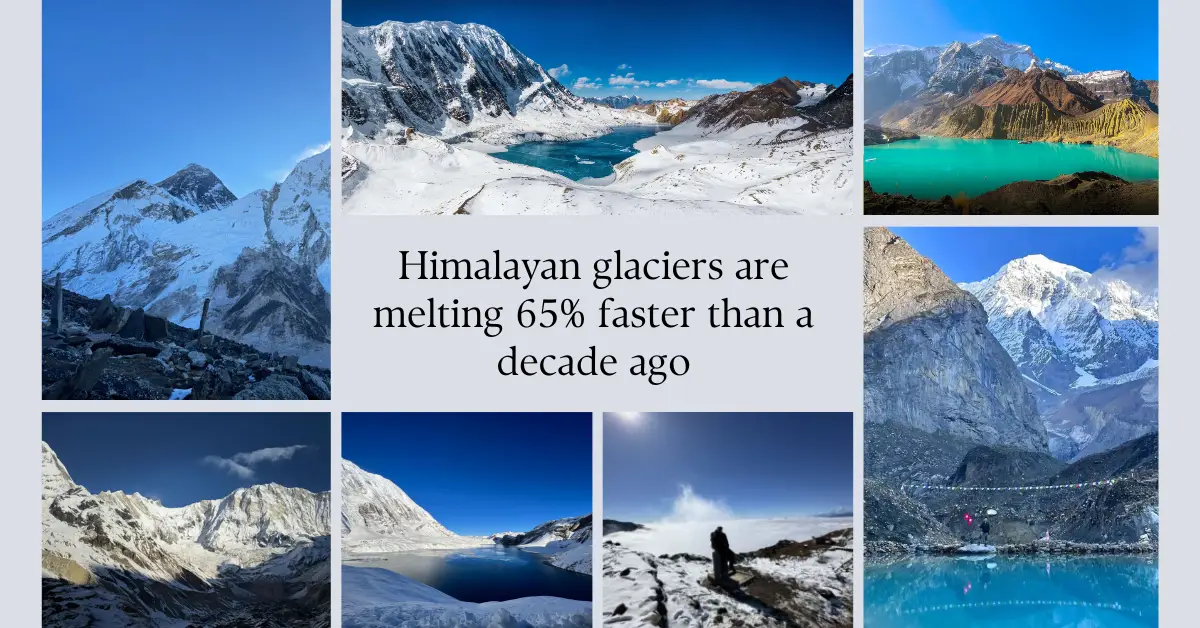
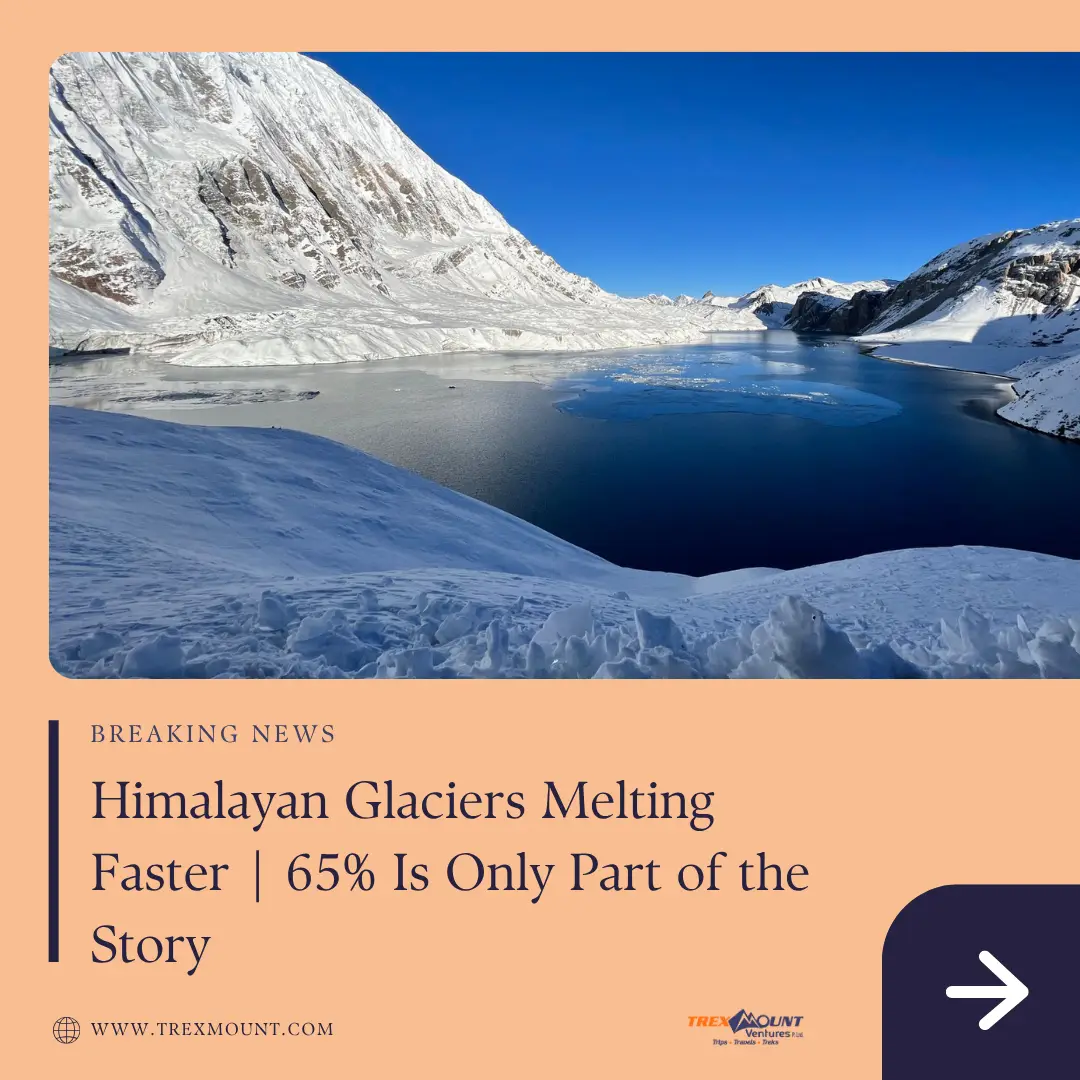
The Himalayas are often described as the “Water Towers of Asia,” and for good reason. Their glaciers, snow, and ice help regulate water supplies across some of the most densely populated regions on Earth. But the mountains are changing rapidly.
The phrase “Himalayan glaciers melting 65% faster” has recently attracted renewed attention following new research and reporting in 2026. The number is real, but it needs context. The 65% figure comes from ICIMOD's 2023 assessment, which found that Himalayan glacier mass loss during 2011–2020 was 65% higher than during 2001–2010. New ICIMOD research published in 2026 now shows that glacier ice loss across the Hindu Kush Himalaya has continued to accelerate, with the rate of ice loss doubling since 2000.
That makes the story bigger than one statistic.
The latest evidence points toward a changing Himalayan water system, increasing risks around glacial lakes, growing concern about glacier lake outburst floods, and major challenges for communities, infrastructure, agriculture, hydropower and tourism.
For Nepal, which sits at the heart of the Himalayas, these changes are especially important.
The first thing to understand is what the widely shared 65% figure actually measures.
It does not mean that Himalayan glaciers suddenly began melting 65% faster in 2026.
Instead, ICIMOD's 2023 Hindu Kush Himalaya assessment found that glaciers lost mass 65% faster during 2011–2020 than they did during 2001–2010. The assessment was described by ICIMOD as a peer-reviewed study and one of the most comprehensive assessments of changes in the region's snow, ice and permafrost.
That distinction matters.
A more precise way to describe the finding is:
Himalayan glaciers lost mass 65% faster in 2011–2020 than in the previous decade.
It is a measurement of the change in the rate of glacier mass loss between two decades, rather than a statement that today's glaciers are universally melting at exactly 65% above today's rate from ten years ago.
But the wider evidence is equally important because newer research indicates that the acceleration has continued.
In March 2026, ICIMOD released two major reports examining glacier changes across the Hindu Kush Himalaya.
The research found that glacier ice-loss rates have doubled since 2000. Between 1990 and 2020, glaciers across the region lost approximately 12% of their total area and 9% of their estimated ice reserves. The research also found that the region has lost up to 27 metres of ice thickness since 1975.
The findings come from decades of observations and satellite-based analysis.
ICIMOD's 2026 Glacier Outlook also found that approximately 89% of recorded years in its long-term monitoring dataset showed negative glacier mass balance, meaning glaciers lost more mass than they gained in those years.
This is why the current discussion about Himalayan glaciers melting should not be reduced to one viral headline.
The 65% figure tells us about an acceleration observed between two decades.
The 2026 research shows that the broader process of glacier loss is continuing and accelerating.
Glaciers naturally advance and retreat over long periods. The concern today is the speed and scale of the changes being observed.
Rising temperatures are a major driver. The Hindu Kush Himalaya is experiencing significant warming, while changes in snowfall and precipitation also affect how much new snow accumulates on glaciers.
When a glacier loses more ice through melting and other processes than it gains from snowfall and accumulation, its mass decreases.
Several factors can intensify the process:
The World Meteorological Organization reported in 2026 that all 23 monitored glaciers in High Mountain Asia lost mass during the 2025 glaciological year, with above-average temperatures and below-average winter snow contributing to substantial mass loss.
This provides a broader regional context for the continuing Himalayan glacier melt observed by ICIMOD.
It can be tempting to look at shrinking glaciers simply as an environmental issue.
But glaciers are part of a much larger system.
The Hindu Kush Himalaya contains tens of thousands of glaciers and supplies water to major river systems across Asia. ICIMOD's 2026 research identifies the region's glaciers as sources for at least 10 major Asian river systems, supporting water, food, energy and livelihood security for billions of people downstream.
That creates a chain of consequences:
Glacier loss → changing meltwater → changing river flows → water-security pressures → effects on agriculture, energy and communities
The timing of the water is also important.
More melting can temporarily increase water availability in some places. But as glaciers become smaller, their ability to provide meltwater during dry periods eventually declines.
This is why scientists use the term “peak water.”
Peak water refers to the point at which glacier contributions to river flow reach their maximum before declining as the available ice reserve becomes smaller.
The new Systemiq report on Himalayan resilience warns that parts of the region could approach this transition around the middle of the century, with potentially significant consequences for water security.
One of the less obvious consequences of glacier retreat is the formation and expansion of glacial lakes.
As glaciers retreat, depressions and basins can fill with meltwater. Some lakes are held back by natural dams made from glacial ice, rock or loose sediment called moraine.
These lakes are not automatically dangerous.
The concern arises when a lake becomes unstable and a sudden release of water occurs.
That brings us to one of the most important hazards associated with the changing Himalayan cryosphere:
A glacier lake outburst flood, commonly called a GLOF, occurs when water held in or around a glacial lake is suddenly released.
ICIMOD defines a GLOF as the sudden release of water from a glacier-fed lake. The water may be contained by moraine, ice or bedrock, and failure can occur through mechanisms such as dam breaching, slope failure or overtopping.
A GLOF can move rapidly downstream, carrying enormous amounts of water, sediment, rocks and debris.
This means the danger is not restricted to the lake itself.
Communities, bridges, roads, hydropower infrastructure, settlements and trekking trails far downstream can potentially be affected.
As temperatures rise:
ICIMOD notes that the frequency and potential risk of GLOFs are expected to increase as the climate changes, although GLOFs themselves are not a new phenomenon in the Himalayas.
Nepal is not unfamiliar with glacial lake hazards.
ICIMOD's inventory of potentially dangerous glacial lakes identified 47 potentially dangerous lakes across the Koshi, Gandaki and Karnali river basins in Nepal, Tibet and India. The assessment identified 21 of them in Nepal.
The report highlighted lakes including Tsho Rolpa and Imja Lake, both of which have received attention because of their potential downstream impacts.
Nepal's geography makes this issue particularly important.
Many Himalayan valleys descend steeply from high elevations toward populated lower valleys. A sudden release of water in the mountains can therefore travel considerable distances downstream.
The risk also does not exist in isolation.
A high-altitude event can interact with:
Glacier + lake + landslide + heavy rainfall + river + infrastructure
This is why modern disaster research increasingly looks at cascading hazards rather than individual hazards separately.
One of the most striking findings in the latest research is how much of the Himalayan cryosphere remains insufficiently monitored.
ICIMOD's 2026 research examined 38 monitored glaciers, but only seven meet the global monitoring standards established by the World Glacier Monitoring Service. Several major glacierized areas remain poorly monitored.
The newer Systemiq report also highlights a major monitoring gap across the wider Himalayan region. Its analysis points to approximately 40,000 glaciers, while only a very small number are being monitored through sustained detailed observation.
Why does that matter?
Because you cannot properly manage a risk you cannot observe.
Scientists need long-term information about:
Without consistent observations, dangerous changes can remain unnoticed until they become much harder to manage.
There are encouraging developments as well.
ICIMOD specifically identifies Mera Glacier and Rikha Samba Glacier in Nepal among the representative glaciers whose continued monitoring is important for understanding wider changes in the mountain system.
The World Meteorological Organization has also highlighted efforts to improve high-altitude observations in Nepal and Bhutan. One initiative is working with Himalayan monasteries to host automated weather stations in locations where conventional monitoring networks are difficult to maintain.
These systems can contribute to:
Better monitoring does not stop glacier melt by itself.
But it can help communities understand what is changing and prepare before hazards become disasters.
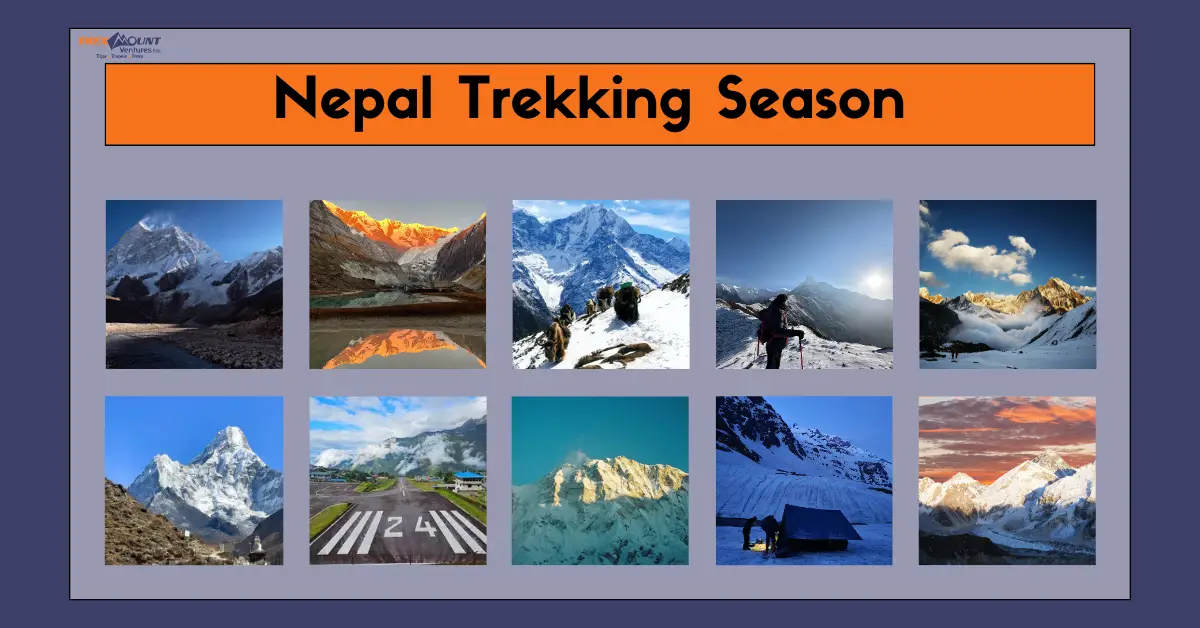
The phrase “Himalayan glaciers melting” can easily create the wrong impression for travellers.
It does not mean that the entire Himalayan trekking region is suddenly closed or that trekking in Nepal is inherently unsafe.
The reality is more specific.
Climate and cryosphere changes can alter the physical environment in which trekking takes place. Some routes may experience changing trail conditions, landslides, flooding, changing water sources or other hazards depending on location and season.
For trekking operators, guides and local authorities, this makes real-time information and route assessment increasingly important.
A responsible approach includes:
For trekkers, the lesson is not to fear the Himalayas.
It is to respect them.
The future depends heavily on how quickly global warming is limited and how effectively Himalayan countries adapt.
ICIMOD's earlier assessment warned that under high-emissions trajectories, the Hindu Kush Himalaya could lose up to 80% of its current glacier volume by 2100. This is a scenario-based projection, not a certainty that exactly 80% will disappear.
The 2026 research adds urgency to that longer-term concern.
The region has already experienced measurable glacier-area and ice-reserve losses, and the rate of ice loss has accelerated.
At the same time, communities cannot simply wait for future climate policy to solve the problem.
Adaptation is already necessary.
The WMO has emphasized that better observations, early warnings and coordinated action are essential as glacier-related hazards increase.
Another important part of the Himalayan glacier story is often overlooked: black carbon.
Black carbon, commonly associated with soot from incomplete combustion, can settle on snow and ice. Darker surfaces absorb more solar energy than clean, reflective snow, potentially accelerating melting.
The new Systemiq assessment highlights black carbon as an important contributor to Himalayan glacier melt and calls for stronger action to reduce these emissions.
This matters because reducing black carbon can have benefits beyond the climate system.
Cleaner combustion can also improve air quality and reduce other forms of pollution.
The Himalayan glacier story therefore connects climate policy with transport, industry, energy, agriculture, air quality and regional cooperation.
The viral 65% figure is powerful because it communicates acceleration in a single number.
But the complete scientific picture is much larger.
We now have several connected findings:
Together, these findings tell a much clearer story than the headline alone.
The Himalayas have always been dynamic. Snow falls, glaciers move, rivers rise and fall, and mountains continue to evolve.
What makes the present period different is the speed of observed change and the growing consequences for people.
The Himalayan glacier melt is affecting more than the appearance of distant mountain peaks. It is connected to water security, river systems, agriculture, hydropower, ecosystems, infrastructure and disaster risk.
For Nepal, the issue is particularly close to home.
The country's mountains support communities, tourism and ecosystems while feeding river systems that extend far beyond Nepal's borders. Changes in the high Himalayas therefore do not stop at the glacier's edge.
The 65% figure deserves attention, but it should be understood correctly. It describes an acceleration already documented between 2001–2010 and 2011–2020. The latest 2026 research suggests the wider trend has continued, with glacier ice-loss rates now estimated to be twice as high as around the beginning of the century.
And as glaciers retreat, the conversation must include not only melting ice but also water security, monitoring, early warnings and glacier lake outburst floods.
The Himalayas are not simply disappearing.
They are changing.
Understanding those changes, and preparing responsibly for them, may be one of the most important challenges facing the region in the decades ahead.

Welcome to Trexmount Ventures !