 Trexmount Ventures

Popular Searches
Ready to plan your next getaway? Let’s connect and create something incredible together.
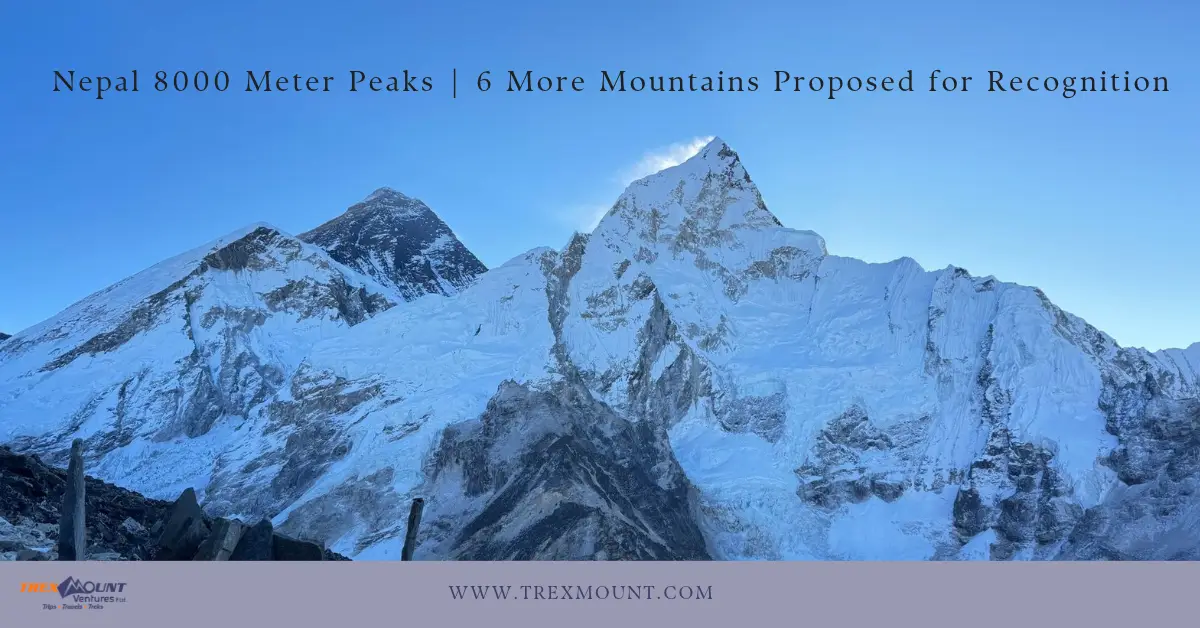

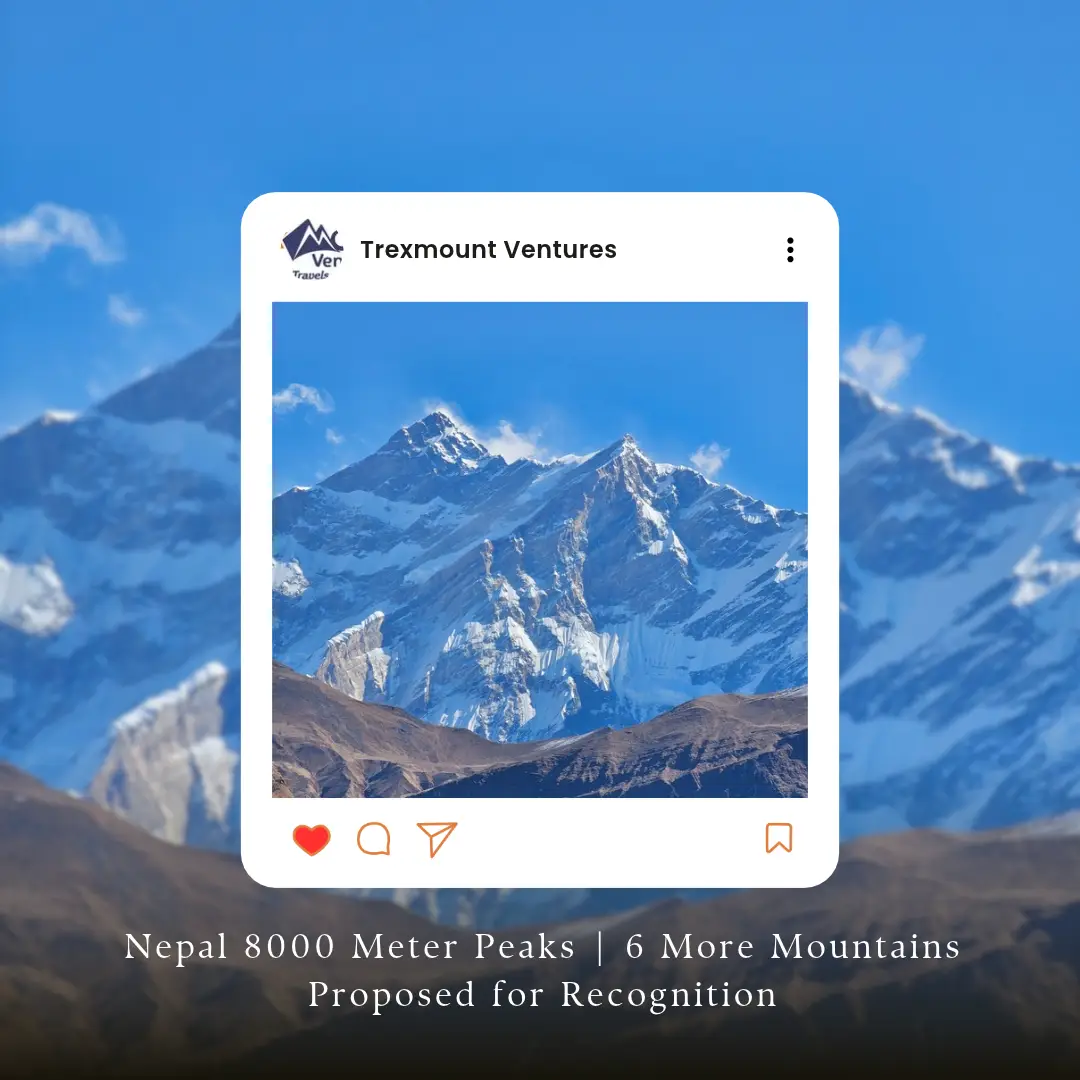
Nepal is home to some of the world's highest mountains, including Mount Everest, Kanchenjunga and Lhotse. However, a new proposal could change how the international mountaineering community counts these Himalayan giants. Nepal has proposed six additional summits above 8,000 metres for recognition as independent mountains. If accepted, the number of internationally recognized eight-thousanders in Nepal could increase from eight to 14, while the global total could rise from 14 to 20.
At Trexmount Ventures, we believe understanding Nepal's mountains goes beyond knowing their heights. Their geographical importance, climbing challenges and tourism value all contribute to Nepal's identity as a leading Himalayan destination. This guide explains the Nepal mountain recognition proposal, the six proposed peaks, the existing classification and what this development could mean for Nepal's tourism industry.
The Nepal 8000 meter peaks are among the highest mountains on Earth, rising above 8,000 metres (26,247 feet). These mountains attract mountaineers from around the world because of their extreme altitude, challenging climbing conditions and remarkable Himalayan landscapes.
The conventional list of eight-thousand-meter peaks includes 14 independent mountains worldwide. Nepal is home to eight of them, making the country a major destination for high-altitude mountaineering.
The world's highest mountains in Nepal include:
These eight-thousand-meter peaks in Nepal are recognized internationally as independent mountains. However, Nepal's national records include additional summits that also rise above 8,000 metres.
This difference between elevation and geographical independence is the main reason behind Nepal's six new 8000m peaks proposal.
Nepal has proposed six additional mountains for international recognition as independent eight-thousanders. The Nepal mountain recognition proposal argues that these summits have distinct geographical identities and deserve separate recognition.
The proposal includes four summits in the Kanchenjunga massif and two in the Lhotse massif.
The Kanchenjunga massif lies in eastern Nepal, near the border with India. It is one of the most remarkable mountain systems in the Himalayas.
Nepal's proposed 8000m mountains in this region include:
These summits are associated with the larger Kanchenjunga mountain system. Nepal argues they should receive independent recognition rather than be treated as subsidiary summits of the main mountain.
However, the reported elevations and naming conventions differ across some news reports. Therefore, an authoritative technical record is important before treating every figure as final.
The Lhotse massif is located in the Everest region and is closely connected to the world's highest mountain.
Nepal's six new 8000m peaks proposal also includes:
Lhotse itself stands at 8,516 metres and is already recognized as an independent eight-thousander.
The proposed recognition of Lhotse Middle and Lhotse Shar would acknowledge their individual summit identities and climbing objectives. Nevertheless, climbing a separate summit does not automatically establish its geographical independence.
The Nepal mountain recognition proposal is based on geographical classification, mountaineering achievements, and the country's Himalayan identity.
A mountain's height alone does not determine whether it qualifies as an independent peak. Geographers also examine its topographic prominence, connecting ridges and relationship with nearby summits.
Topographic prominence measures how far a summit rises above its lowest connecting point to a higher mountain.
For example, a summit rising 8,200 metres may have limited prominence if it connects to a higher mountain through a high ridge. Therefore, experts must evaluate its geographical independence before adding it to the Nepal 8000m peak list.
Nepal's proposed 8000m mountains have individual climbing routes and summit identities. However, their international classification requires broader technical consideration.
Each summit presents its own climbing challenges. Reaching the summit of Lhotse does not necessarily mean reaching Lhotse Middle or Lhotse Shar.
Similarly, climbers approaching the Kanchenjunga massif must consider the terrain, weather, and technical demands of their specific summit.
Recognizing these peaks separately could provide greater visibility to mountaineers who pursue them as individual objectives.
Nepal already holds a leading position in global mountaineering. Recognizing additional independent peaks could further highlight the country's geographical importance.
The Nepal 8000 meter peaks are more than a list of elevations. They represent the country's natural heritage, mountain communities, and long-standing connection with Himalayan exploration.
The conventional international list contains 14 independent mountains above 8,000 metres. These mountains are located across Nepal, China, Pakistan and the Nepal–India border region.
However, Nepal's proposal could increase the World 8000 meter mountains count to 20 if all six additional summits receive international recognition.
The distinction is important because the world's 8000 metre mountains are classified according to their geographical independence, not simply their elevation.
The existing international classification recognizes eight independent eight-thousanders in Nepal.
Nepal's national records, however, include 14 summits above 8,000 metres. The government and mountaineering organizations are seeking international recognition for the additional six.
Therefore, Nepal's total 8000m peaks could change from eight to 14 internationally recognized independent mountains.
This does not mean six new mountains have suddenly appeared. Rather, the proposal seeks a change in how existing Himalayan summits are classified.
The proposal has been presented to the International Climbing and Mountaineering Federation (UIAA), which is an international organization involved in mountaineering standards, safety and development.
However, presenting a proposal and receiving formal recognition are two different steps.
Nepal has pursued this initiative for several years. A government-appointed committee recommended the recognition of additional eight-thousanders in 2013. In 2014, Nepal recognized Kanchenjunga West domestically and opened it for commercial climbing.
The latest Nepal mountain recognition proposal continues that effort.
As of the reported October 2026 development, the international recognition of all six proposed peaks remains a separate decision. The Nepal 8000m peak list should therefore distinguish between the eight internationally recognized mountains and the six proposed additions.
The recognition of Nepal's six new 8000m peaks could create new opportunities for the country's mountaineering and tourism sectors.
At Trexmount Ventures, we understand that international interest in Nepal's mountains extends beyond climbing expeditions. Travelers also visit Nepal for trekking, mountain photography, cultural experiences and the chance to explore the Himalayas.
If international recognition is granted, more climbers may consider the proposed summits as individual expedition objectives.
This could create opportunities for expedition operators, climbing guides, equipment suppliers and local mountain communities.
However, recognition alone does not guarantee an increase in climbing permits or expedition bookings.
The proposed peaks are located in the Kanchenjunga and Everest–Lhotse regions.
Greater international attention could encourage travelers to explore areas beyond the most popular trekking routes.
For example, the Kanchenjunga region could receive additional interest from experienced mountaineers and adventure travelers seeking less crowded destinations.
The Nepal 8000 meter peaks also create opportunities for tourism companies to educate travelers about the country's geographical diversity.
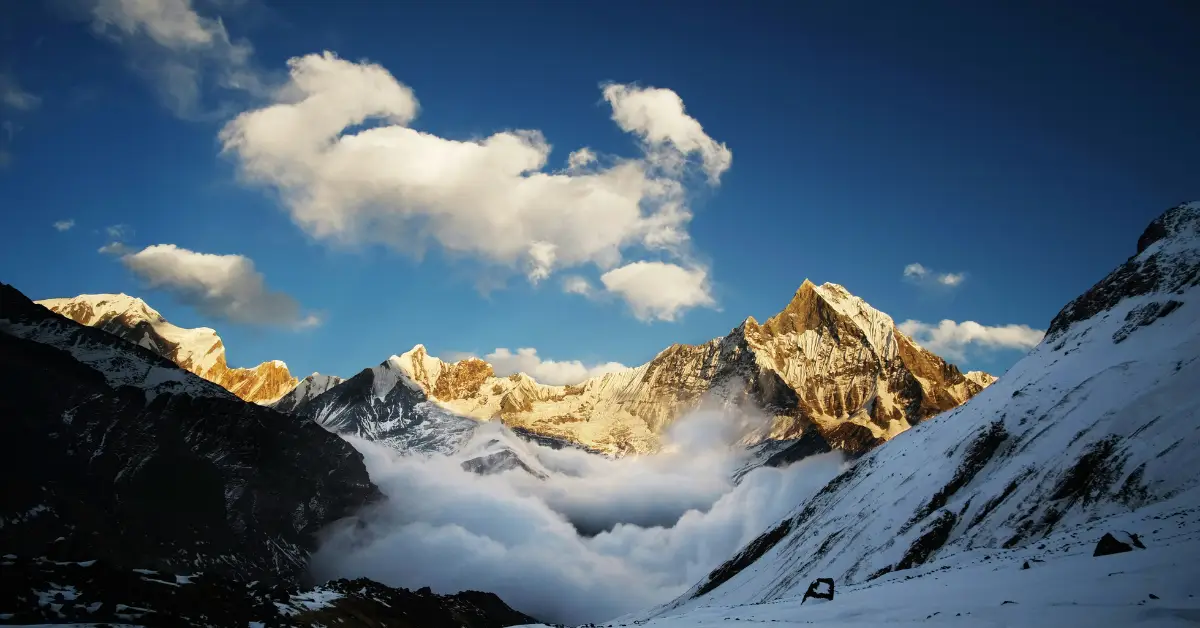
Popular trekking experiences such as the Everest Base Camp Trek and Annapurna Base Camp Trek remain important ways for visitors to experience the Himalayas without attempting an eight-thousander expedition.
The proposed recognition could increase awareness of Nepal's mountain regions while supporting interest in trekking, cultural tours and adventure travel.
Mountaineering and trekking contribute to the livelihoods of guides, porters, lodge owners, transport operators and local businesses.
If the proposal encourages responsible tourism growth, mountain communities could benefit from additional employment and business opportunities.
Nevertheless, sustainable tourism requires careful planning. Increased visitor numbers must not come at the cost of local culture, natural resources or mountain safety.
The Nepal 8000 meter peaks proposal reflects the country's continuing effort to highlight its geographical and mountaineering significance.
The six proposed summits already exist, and their climbing routes have attracted mountaineers. The current debate concerns whether these summits should receive international recognition as independent mountains.
If the proposal succeeds, Nepal's total 8000m peaks could increase from eight to 14 internationally recognized eight-thousanders. The World 8000 meter mountains count could rise from 14 to 20.
For Nepal's tourism sector, the development could create opportunities for mountaineering, trekking and regional tourism promotion. However, the long-term benefits will depend on responsible tourism practices, accurate information and the ability to protect Nepal's mountain environments.
At Trexmount Ventures, we believe that every Himalayan journey should begin with reliable information and a genuine appreciation for Nepal's mountains.
Nepal's mountains offer far more than high-altitude climbing. From the legendary Everest region to the spectacular Annapurna Himalayas, every journey brings an opportunity to experience the country's natural beauty, culture and mountain traditions.
At Trexmount Ventures, we help travelers plan trekking and tour experiences with knowledgeable local guides, reliable arrangements, and a strong focus on safety. Whether you are considering the Everest Base Camp Trek, Annapurna Base Camp Trek or another Himalayan adventure, our team can help you choose a journey that matches your interests, fitness and travel plans.
Contact Trexmount Ventures to discuss your next Nepal adventure and experience the Himalayas with a team that understands the mountains.
Nepal has eight internationally recognized independent mountains above 8,000 metres. However, Nepal's national records include 14 summits above this elevation. The government and mountaineering organizations have proposed six additional summits for international recognition. If accepted, Nepal would have 14 internationally recognized eight-thousanders.
The six proposed peaks are Yalung Khang, Kanchenjunga South, Kanchenjunga Central, Yalung Khang West or Kanchenjunga West, Lhotse Middle and Lhotse Shar. Four belong to the Kanchenjunga massif, while two are associated with the Lhotse massif. Nepal is seeking international recognition for these summits as independent mountains.
Nepal has presented the proposal to the UIAA for international consideration. However, the presentation of the proposal does not mean all six peaks have received formal recognition. The international mountaineering community must consider their geographical independence and classification before changing the conventional list of 14 eight-thousanders.
The conventional list includes 14 independent mountains above 8,000 metres. Classification depends on geographical independence, not simply elevation. Several secondary summits also exceed 8,000 metres, but they do not automatically qualify as separate mountains. Nepal's proposal argues that six additional summits deserve independent recognition.
Mount Everest is the highest mountain in Nepal and the world, with an officially recognized elevation of 8,848.86 metres. It lies along the Nepal–China border in the Mahalangur Himal. Everest attracts mountaineers from around the world, while the Everest Base Camp Trek offers a popular way to experience the surrounding Himalayan landscape.
A mountain is generally considered an independent geographical feature, while a subsidiary summit forms part of a larger mountain system. Topographic prominence, connecting ridges and geographical separation help determine independence. A summit can exceed 8,000 metres but still be classified as a subsidiary peak rather than an independent eight-thousander.
The proposal could increase international interest in Nepal's mountaineering destinations. If accepted, it may encourage more expedition planning, regional tourism promotion and investment in mountain services. However, recognition alone does not guarantee more visitors. Responsible tourism, safety, infrastructure and environmental protection will remain important for long-term tourism growth.
Most proposed eight-thousanders require advanced mountaineering skills, specialized equipment and high-altitude expedition experience. Ordinary trekkers should not confuse these climbing objectives with trekking routes. However, travelers can experience the surrounding Himalayan scenery through established trekking routes, including the Everest Base Camp Trek and other guided mountain journeys.
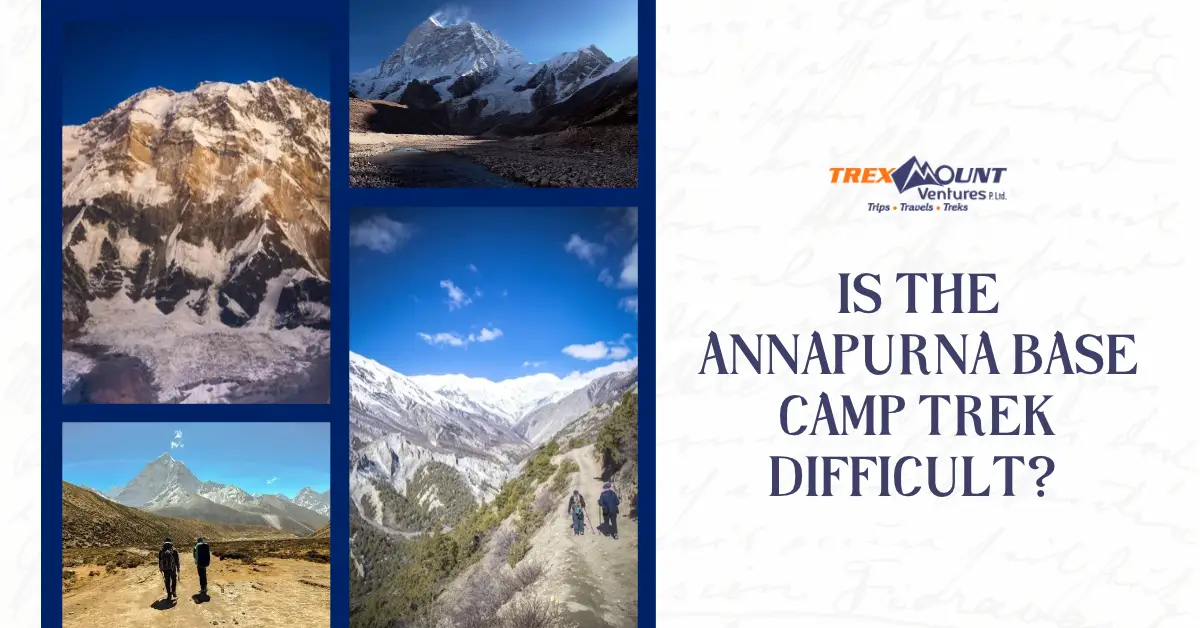
The Annapurna Base Camp Trek can be suitable for beginners with reasonable fitness, proper preparation and an appropriate itinerary. It does not require climbing an 8,000-metre mountain. However, trekkers must prepare for altitude, changing weather and long walking days. A reliable guide and gradual acclimatization can make the experience safer and more enjoyable.
The future of Nepal's 8000m peak list depends on international consideration of the six proposed summits. If the UIAA and the wider mountaineering community accept them as independent mountains, Nepal's internationally recognized total could increase from eight to 14. Until then, the conventional international list remains at 14 eight-thousanders worldwide.

Welcome to Trexmount Ventures !