Trexmount Ventures
Trexmount

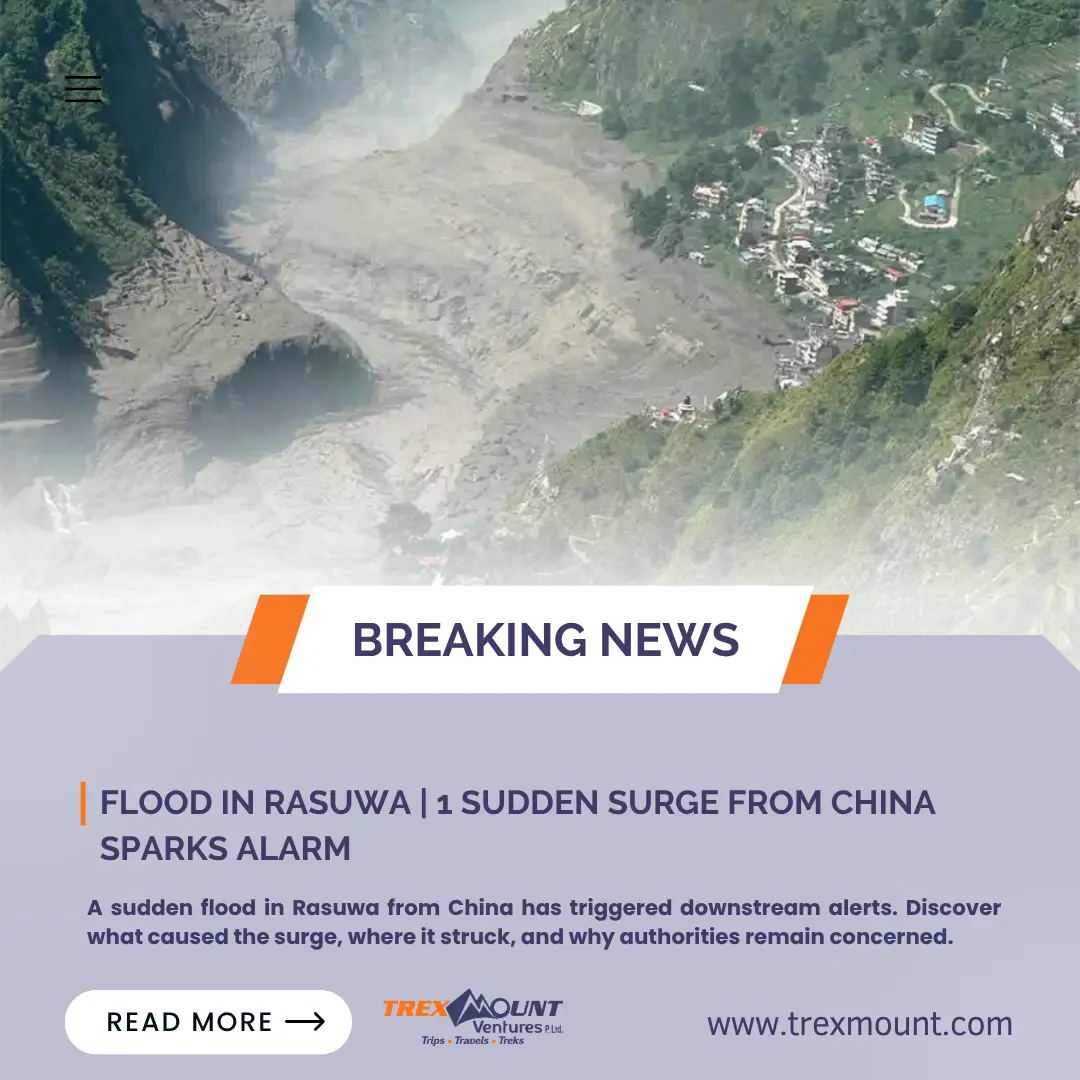
Flood in Rasuwa | 1 Sudden Surge From China Sparks Alarm

Flood in Rasuwa | 1 Sudden Surge From China Sparks Alarm
By Ayush Dhakal
26 Aug, 2026
News

On the morning of Wednesday, August 26, 2026, a sudden flood from China roared into the Bhote Koshi River, catching communities in Rasuwa completely off guard. Within minutes, what began as a normal monsoon morning turned into a scramble for safety as swollen waters tore through border settlements. This article breaks down what happened, why it matters, and what residents downstream need to know right now.


What Happened: A Timeline of the Rasuwa Flood


According to Nepal's Flood Forecasting Division, officials were alerted around 9:00 am that a massive flood had entered the river system from the Tibetan side of the border. An official quoted by The Himalayan Times described the surge as "unprecedented and huge."


Here's a quick breakdown of the key facts as they currently stand:


  • Origin: The flood entered the Bhote Koshi River from the Chinese (Tibetan) side, near the Nepal-China border.
  • Worst-hit areas: Timure and Syabrubesi in Gosaikunda Rural Municipality bore the brunt of the damage, including the Timure Customs Office area.
  • Time of onset: Around 9:00 am local time on Wednesday, August 26, 2026.
  • Cause under investigation: Authorities are examining whether this was triggered by a Glacial Lake Outburst Flood (GLOF) or another factor, no rainfall-related trigger has been confirmed yet.
  • Infrastructure impact: Early reports point to damage to markets, roads, and hydropower project infrastructure along the river corridor.

Because this is still a developing situation, exact casualty and damage figures have not been finalized. Authorities have said the full extent is still being assessed on the ground.


Why Rasuwa Keeps Flooding: The China Connection


If this sounds familiar, that's because it is. Rasuwa sits at a uniquely vulnerable point on the map. Right where glacier-fed rivers flowing down from Tibet cross into Nepal.


  • The Bhote Koshi is formed by rivers originating in China, meaning any glacial or weather event upstream can hit Nepal with little to no warning.
  • Just over a year earlier, in July 2025, a similar flash flood surged into the same river system, killing several people and leaving dozens missing. That earlier disaster swept away the Miteri (Friendship) Bridge connecting
  • Nepal and China, damaged the Rasuwagadhi dry port, and destroyed sections of hydropower infrastructure.
  • Experts eventually confirmed that flood was caused by the rupture of a supraglacial lake on the Chinese side, a stark reminder of how climate-driven glacial instability in the Himalayas can translate into sudden major flood damage hundreds of kilometers downstream.


This recurring pattern is part of a larger, well-documented trend: flood in Nepal disasters are increasingly linked to glacial melt and unstable lakes in the high mountains, not just seasonal rainfall. As global temperatures rise, this kind of cross-border flood risk is expected to become more frequent, not less.


Areas Under High Alert


Authorities have not limited their warnings to Rasuwa alone. Given how fast water travels down the Trishuli River system, authorities have placed a wide downstream corridor on alert.

Districts and zones currently flagged for caution include:


  • Rasuwa — the epicenter of the flood, particularly Timure and Syabrubesi
  • Nuwakot — directly downstream along the Trishuli River
  • Dhading — riverside settlements and highway sections at risk
  • Gorkha — advised to monitor water levels closely
  • Chitwan — flagged for possible inundation downstream from Devghat in Nawalparasi, all the way to Muglin


The National Disaster Risk Reduction and Management Authority (NDRRMA) has issued a special appeal urging residents across these five districts to stay alert and move to safer ground if they live near the riverbanks.


Highways and Transport Disruption


Nepal's mountain highways are notoriously vulnerable during monsoon season, and this flood is no exception.


  • Authorities have urged the closure of the Prithvi Highway and Tribhuvan Highway in flood-risk zones as a precaution.
  • The Galchhi–Nuwakot–Rasuwa–Syabrubesi road and the Muglin–Narayangadh road have also been flagged as high-risk corridors.
  • Travelers are strongly advised to avoid unnecessary journeys along these routes until conditions stabilize.
  • A rescue helicopter reportedly could not land in Timure after floodwaters swept away the local helipad, underscoring how quickly ground infrastructure has been compromised.


If you're planning to travel through this region in the coming days, it's worth checking road status updates before setting out, as landslides often follow flood events in these hilly districts.


Emergency Response: Who's on the Ground


Following directives from the Prime Minister's office, multiple security and disaster agencies have mobilized:


  • Nepal Police
  • Armed Police Force (APF)
  • Nepal Army (NA)
  • District administration and local disaster management committees


An emergency meeting of the Monsoon Response Command Post was convened, with the Home Minister attending personally to assess the situation and coordinate the response. This kind of rapid, multi-agency mobilization reflects lessons learned from the 2025 flood, when APF personnel and rescue teams were deployed in similarly difficult, fast-moving conditions, and where search efforts for missing personnel and civilians stretched on for days.


Safety Advice: What Residents Should Do


If you live in or near the affected districts, here's what officials are recommending:


  • Stay alert at all times, don't assume the water level will remain stable, especially at night.
  • Avoid fishing, bathing, or working directly along the Trishuli and Bhote Koshi riverbanks.
  • If you live in a low-lying or flood-prone settlement, relocate to higher ground temporarily, even if the current water level seems manageable.
  • Avoid unnecessary travel near rivers, streams, and landslide-prone hill sections.
  • Do not rely on rumors circulating on social media, follow only official updates from NDRRMA, local administration, or verified news outlets.
  • Keep the Nepal helpline number (1234) saved and accessible for reporting emergencies or seeking disaster-related assistance.
  • Hydropower projects and infrastructure operators near the river have also been asked to take independent precautionary measures given the risk to dams and construction sites.


Impact on Hydropower and Cross-Border Trade


Rasuwa isn't just a residential district, it's a critical corridor for Nepal's energy sector and its trade relationship with China.


  • Several hydropower projects along the Bhote Koshi and Trishuli corridor have reported damage or are under precautionary shutdown.
  • The Timure Customs Office, a key checkpoint for Nepal-China trade, has again been affected, echoing the disruption seen after the 2025 flood, when the Friendship Bridge was destroyed and cross-border commerce halted for an extended period.
  • Repeated flood damage to this corridor raises long-term questions about how resilient Nepal's border infrastructure and hydropower investments are to glacial flood risk, a topic likely to dominate policy discussions once the immediate emergency passes.


What Comes Next


Investigators are working to determine whether this was a GLOF event or triggered by another cause, similar to the process that followed the 2025 disaster. Until an official cause is confirmed, residents and officials alike are treating the situation with heightened caution.


In the meantime:

  • Disaster response teams continue search and relief operations in Timure and Syabrubesi.
  • Downstream districts remain on alert status, with water levels being monitored continuously.
  • Updates on casualties, missing persons, and total damage are expected as assessment teams gain fuller access to affected areas.


Final Thoughts


The flood in Rasuwa is a sobering reminder of how exposed Nepal's northern border districts are to sudden, glacier-driven disasters originating across the border in China. With major flood damage already reported in Timure and Syabrubesi, and alert zones stretching all the way to Chitwan, this is very much a fast-evolving story.


If you or your family live along the Trishuli or Bhote Koshi river corridor, prioritize safety over routine, move away from the riverbanks, stay informed through official channels, and keep the 1234 disaster helpline handy. We'll continue to track verified updates as more information becomes available.


This article is based on reporting from The Himalayan Times and other verified Nepali news sources as of August 26, 2026. Given the developing nature of this disaster, figures related to casualties and damage may change as official assessments continue.

Share this article:

Inquiry Now

I agree to terms & conditions.