 Trexmount Ventures
Trexmount Ventures
Trexmount Ventures

Popular Searches
Ready to plan your next getaway? Let’s connect and create something incredible together.
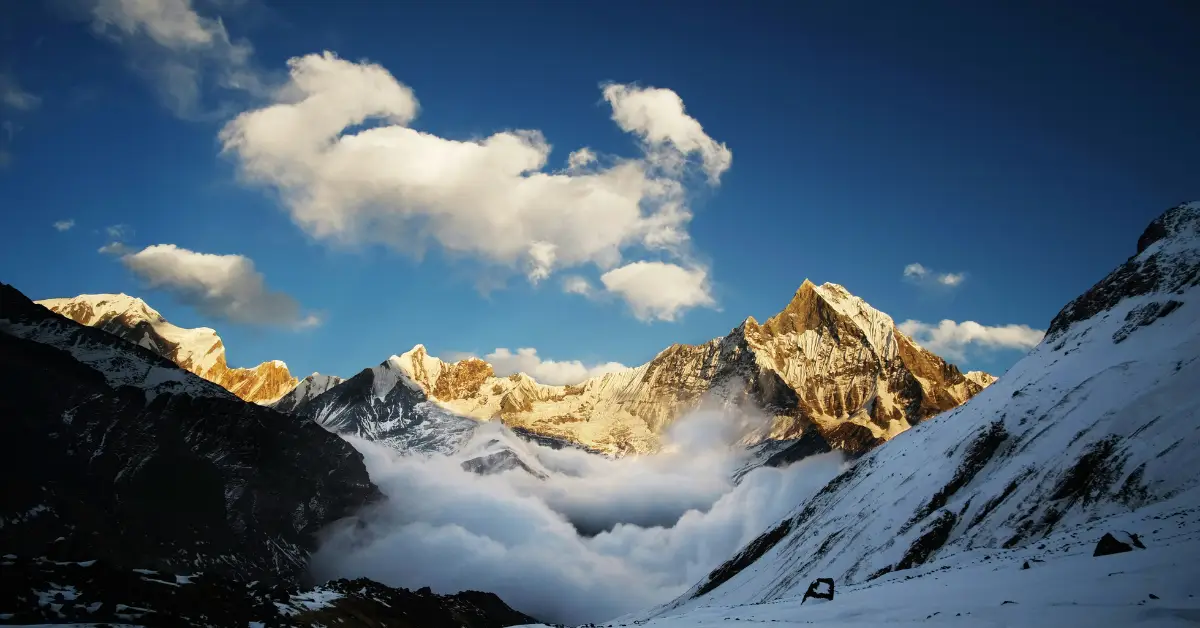


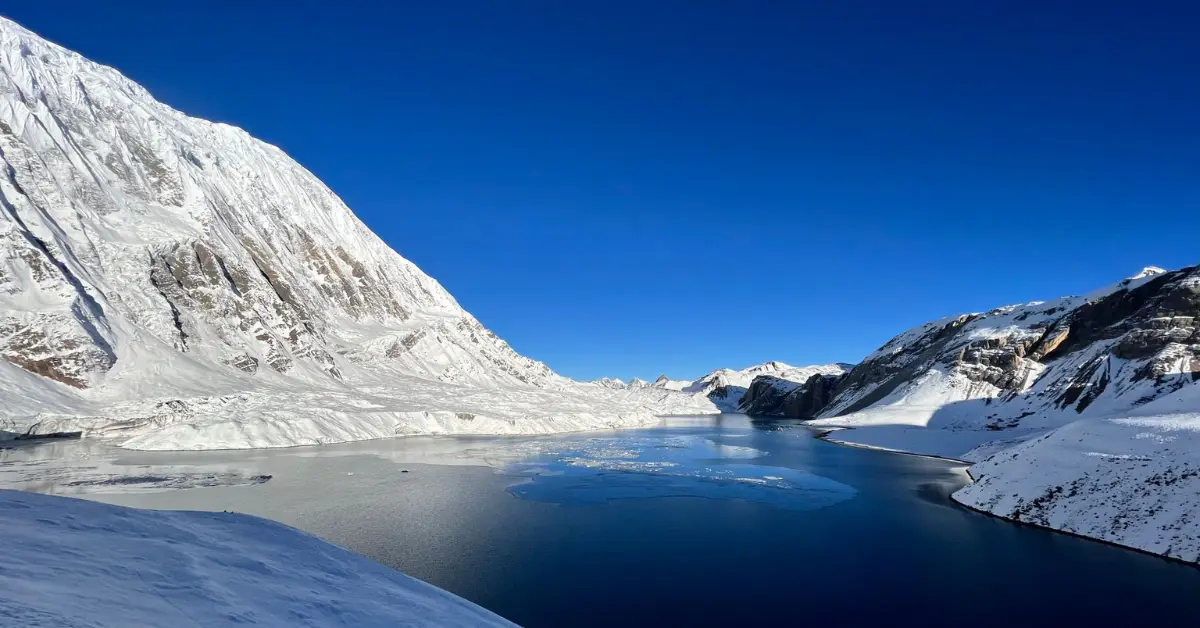

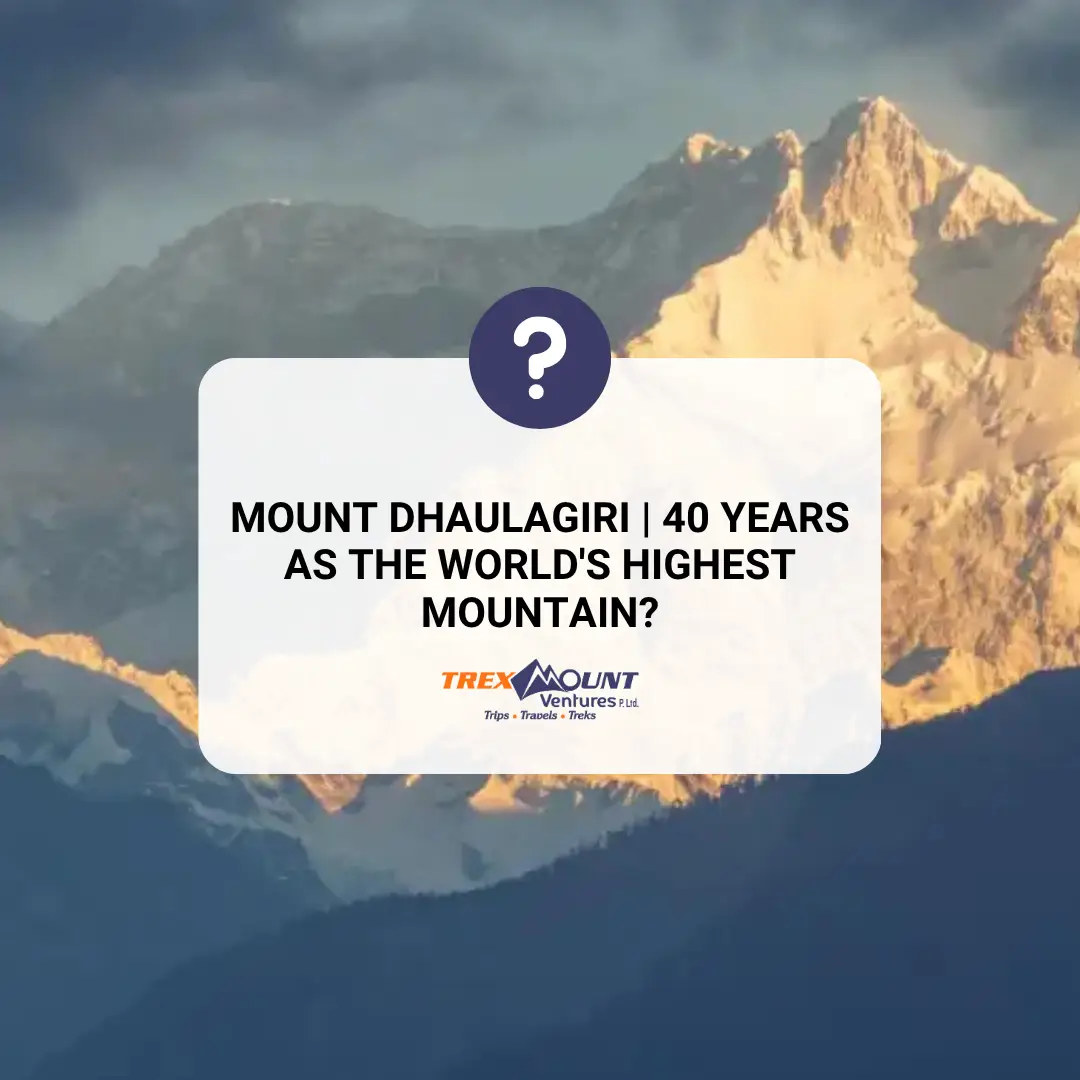
Long before Mount Everest became a household name, another Himalayan giant held the title of the world's highest known peak. Mount Dhaulagiri, rising from the western hills of Nepal, was believed to be the tallest mountain on Earth for roughly four decades in the 19th century, a fact that surprises even seasoned trekkers today. This article walks through Dhaulagiri's discovery, its height, why it held the "world's highest" title for so long, and how it eventually lost that crown to Kangchenjunga and Everest.
Mount Dhaulagiri is the highest peak within the Dhaulagiri Mountain range, also called the Dhaulagiri Himal, a massif stretching roughly 120 km through western Nepal between the Bheri and Kali Gandaki rivers. The name comes from Sanskrit, “Dhavala Giri”, meaning "white" or "dazzling mountain," a fitting description for a peak whose ice-bound, triangular summit glows almost incandescent white against the sky.
Today, Dhaulagiri is officially recognized as the seventh-highest mountain in the world, but that wasn't always its ranking. For a significant stretch of history, cartographers and surveyors believed it stood alone at the very top.
Western explorers and surveyors first calculated Dhaulagiri's height in 1808. At the time, this was a monumental moment in the history of mountaineering and geography, because it dethroned Mount Chimborazo in Ecuador, which had been considered the world's highest mountain up to that point at roughly 6,130 meters.
A few things are worth noting about this "discovery":
Once measured, Dhaulagiri's height put every previously known mountain, in South America, Europe, and Africa to shame, and the Himalayas were suddenly thrust into the center of the world's geographical imagination.
Dhaulagiri stands at 8,167 meters (26,795 feet). Here's a quick snapshot of its key statistics:
Interestingly, Dhaulagiri is the highest mountain located entirely within Nepal's borders, unlike Everest and Kangchenjunga, which sit along international boundaries.
This is the heart of the story, and the answer is fairly simple: measurement technology and access hadn't caught up with the scale of the Himalayas yet.
When Dhaulagiri was surveyed in 1808, it was the tallest peak that Western geographers had been able to calculate. But the Himalayan range is enormous, remote, and was politically closed off to foreign surveyors for long stretches of the 19th century. That meant:
It wasn't until the Great Trigonometrical Survey of India ramped up its work in the mid-19th century that more of the Himalayan giants were properly measured. This massive, multi-decade British survey project systematically triangulated peaks across the Indian subcontinent and the Himalayas, and it's the reason Kangchenjunga and later Everest were confirmed as taller than Dhaulagiri.
So Dhaulagiri's 40-year reign wasn't because it was uniquely difficult to dethrone, it was simply the tallest peak measured first. As surveying methods improved and reached further into the Himalayas, taller peaks were inevitably found.
According to sources on historically presumed-highest mountains, Dhaulagiri held the title from 1808 until around 1847, at which point Kangchenjunga (8,586 m) was measured and took over as the presumed highest peak. Kangchenjunga's reign was comparatively short, only about five years, before Mount Everest was confirmed as the true highest point on Earth around 1852.
It's worth flagging that not all sources agree precisely on the handover date. Some cite 1838 for Dhaulagiri's dethroning, others 1847, and a few outliers place Everest's confirmation as late as 1858. The discrepancies largely come down to which specific survey or publication a given source is referencing, since results were verified and re-verified over several years before being widely accepted. But the more heavily cited figure, and the one consistent with Dhaulagiri holding the title for roughly 40 years, points to 1847/1848 as the more accurate transition point, not 1838.
Here's the general timeline as best supported by the evidence:
It's natural to wonder how the mountain that once held the "world's highest" title stacks up against the mountain that holds it now. Here's a direct comparison:
Although Mount Dhaulagiri is now the world’s 7th-highest mountain, it once held a remarkable place in mountaineering history. Before Mount Everest was confirmed as the highest peak, Dhaulagiri was believed to be the tallest mountain in the world.
Key differences include:
A few observations from this comparison:
While it no longer holds the "world's highest" title, Dhaulagiri has earned a different kind of reputation among mountaineers: it's considered one of the more dangerous eight-thousanders. Understanding Dhaulagiri dangers is essential for anyone researching the mountain, whether for trekking, expedition planning, or general curiosity.
Some of the specific hazards include:
This combination of factors is why Dhaulagiri, despite being "only" the seventh-highest mountain, commands serious respect within the mountaineering community — arguably more caution than some taller but less technically hostile peaks.
Mount Dhaulagiri's 40-year reign as the presumed highest mountain in the world is a fascinating snapshot of how exploration, survey technology, and geopolitical access shaped our understanding of the planet's geography. From 1808 to roughly 1847, it stood unchallenged in Western records, not because it was truly the tallest, but because it was the tallest mountain measurable at the time.
Its eventual dethroning by Kangchenjunga and then Everest didn't diminish its significance. If anything, Dhaulagiri's difficult, dangerous slopes and its position as the seventh-highest peak on Earth make it one of the more compelling stories in Himalayan history, a mountain that once wore the crown, lost it to more precise science, and still commands serious respect from climbers today.

Welcome to Trexmount Ventures !