 Trexmount Ventures
Trexmount Ventures
Trexmount Ventures

Popular Searches
Ready to plan your next getaway? Let’s connect and create something incredible together.
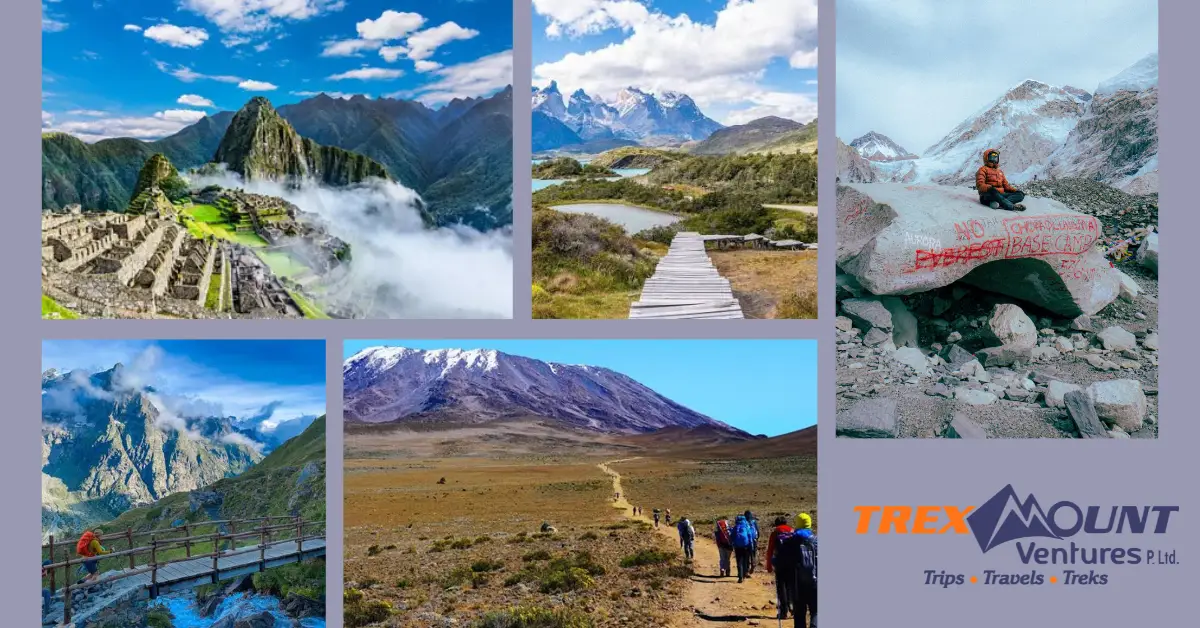
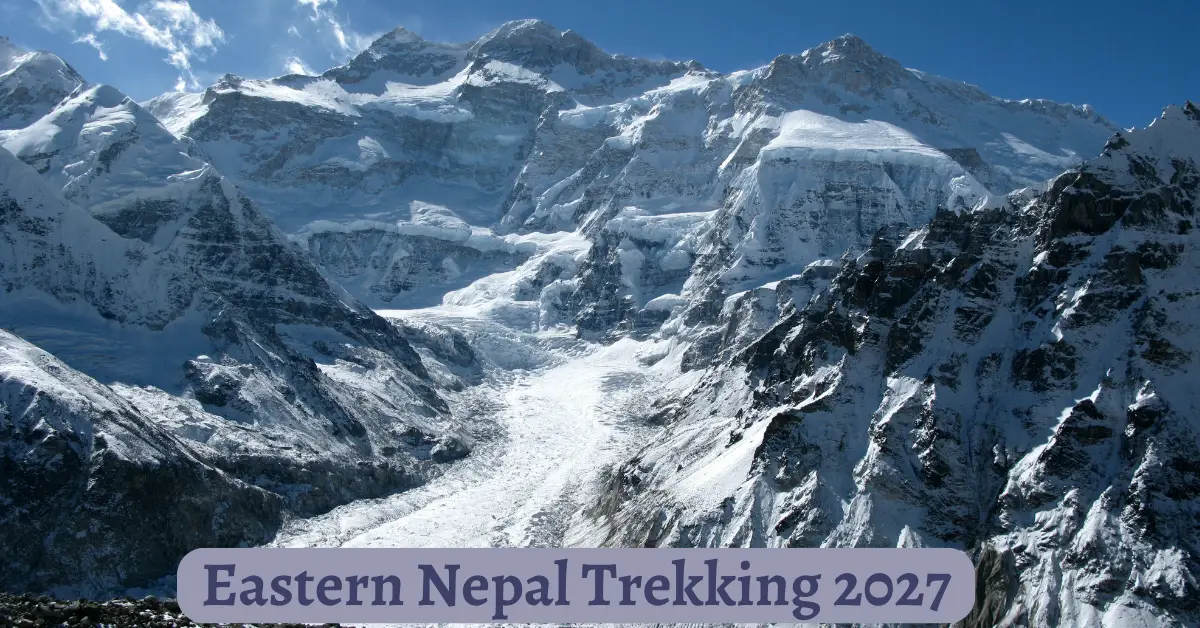
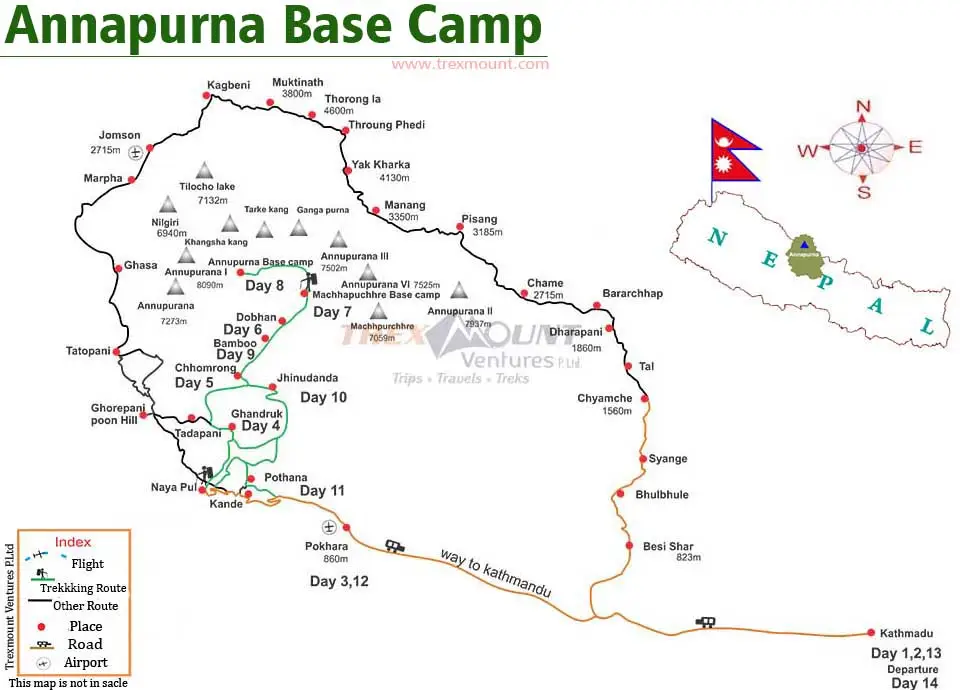
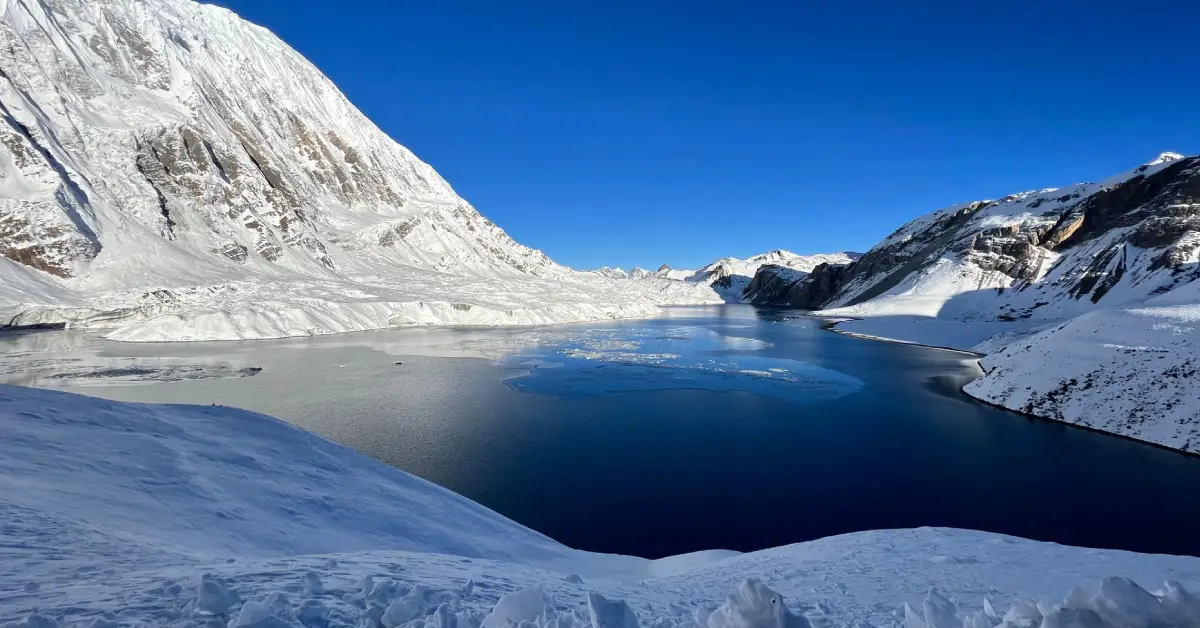
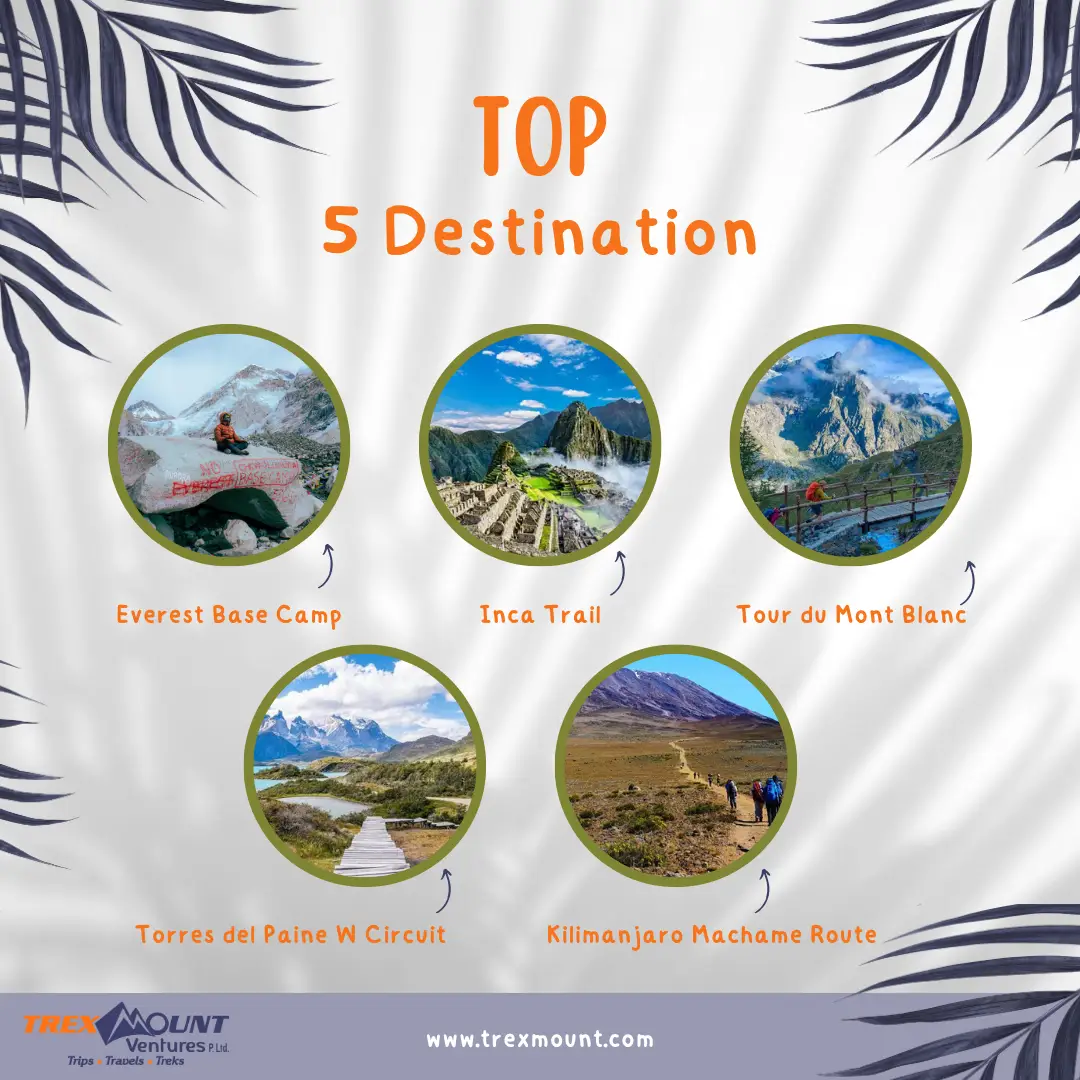
The best trekking trails in the world are Everest Base Camp, the Inca Trail, Tour du Mont Blanc, Torres del Paine W Circuit, and Kilimanjaro's Machame Route. These five routes top nearly every list of bucket-list treks for a reason.
Each trail delivers something different:
At Trexmount Ventures, we've guided trekkers on these exact paths. What follows is a straight answer, not fluff, built from what actually happens on the trail.
These trails aren't hyped by marketing. They're proven among the best hiking trails around the world because of scenery, culture, and physical challenge combined.
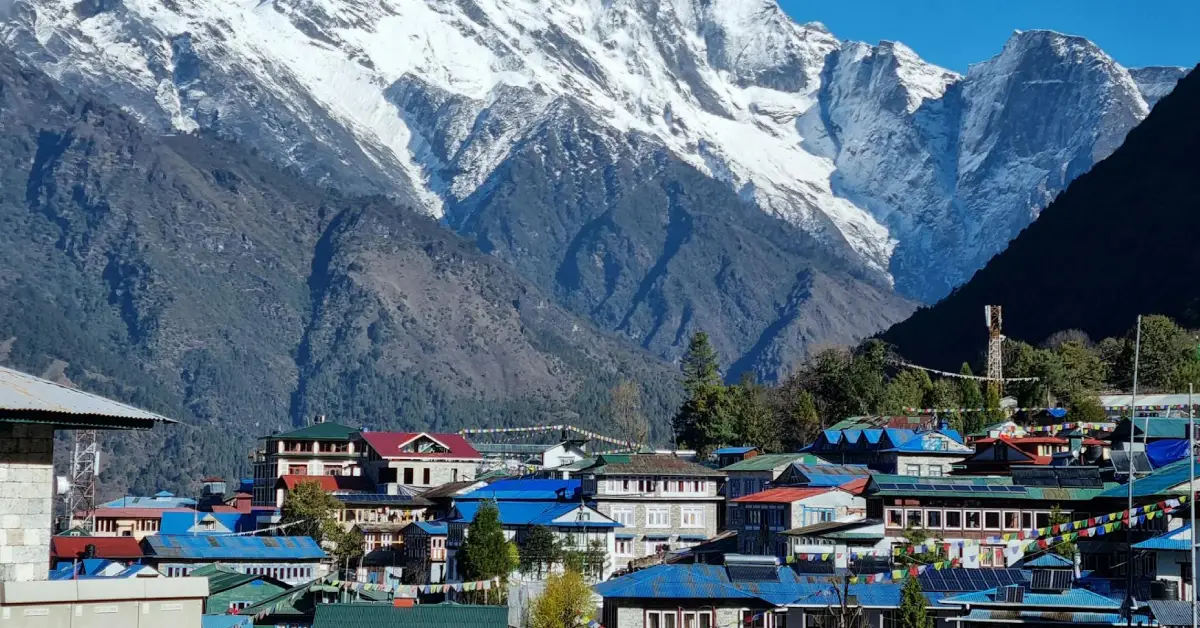
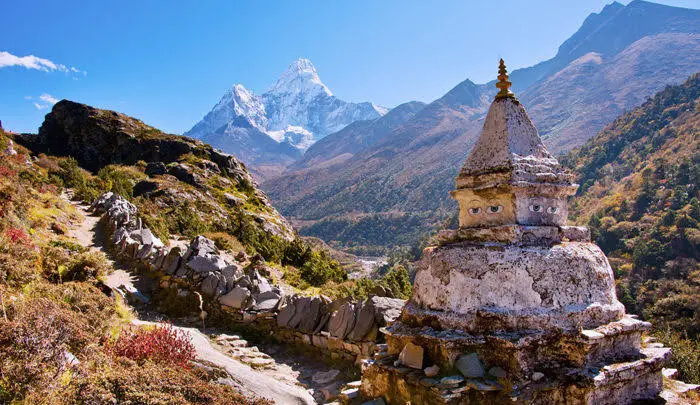
Everest Base Camp (Nepal) climbs to 5,364 meters past Namche Bazaar, Tengboche monastery, and the world's highest peaks. It remains the most searched of the best trekking trails in Nepal, and for good reason: nowhere else puts you this close to Everest without technical climbing gear.
Inca Trail (Peru) is a 4-day stone path built by the Incas, ending at Machu Picchu through the Sun Gate. Only 500 permits are issued daily, making it one of the most tightly regulated bucket list treks on earth.
Tour du Mont Blanc circles Western Europe's highest peak across France, Italy, and Switzerland. Hikers can stay in mountain refuges every night, making it one of the more comfortable multi-day trekking routes for those who don't want to camp.
Torres del Paine W Circuit (Chile) cuts through Patagonia's granite towers, glaciers, and turquoise lakes. It's consistently ranked among the best hiking destinations for landscape photography.
Kilimanjaro Machame Route (Tanzania) takes trekkers from rainforest to arctic glacier in under a week, without ropes or technical climbing. It's Africa's tallest peak and one of the "Seven Summits."
Among these five, Kilimanjaro and Everest Base Camp carry the highest trekking difficulty levels due to altitude, not technical skill. Kilimanjaro's summit night at over 5,800 meters causes the most altitude sickness cases of any popular trek globally. Everest Base Camp trekkers face similar risk above 4,000 meters. Neither requires ropes, but both demand serious acclimatization planning.
Tour du Mont Blanc and the Inca Trail are the most beginner-friendly of the group.
Everest Base Camp and Kilimanjaro require more physical preparation due to altitude.
Costs vary widely across these scenic hiking trails:
Permits, guides, and park fees are the biggest cost drivers.
The best time to trek differs sharply by region. Himalayan treks like Everest Base Camp are best from March to May and September to November, avoiding monsoon and deep winter. Patagonia's Torres del Paine window runs November to March, its southern hemisphere summer. Kilimanjaro is climbable year-round but best in dry seasons: January to March or June to October.
Yes, for most of these routes:
No matter which of the best trekking trails you choose, trekking gear essentials stay consistent: broken-in boots, layered clothing, a proper sleeping bag rated for altitude, water purification, and a first-aid kit with altitude medication. Trekking poles reduce knee strain significantly on descents across all five routes.
These trails aren't ranked by difficulty alone. They're ranked by what stays with people long after the trek ends: the silence at Torres del Paine, sunrise over Everest, the Sun Gate reveal at Machu Picchu, glacier views on Kilimanjaro, and alpine huts along Mont Blanc.
If you've been putting off a real mountain trekking adventure, this is the sign. Trexmount Ventures has walked these trails and can tell you honestly which one fits your fitness, budget, and time. Reach out before the next permit season fills up.
Tour du Mont Blanc is generally considered the easiest entry point among world-class treks. It has well-maintained paths, frequent mountain huts for rest and food, and flexible daily distances. Trekkers don't need technical climbing skills, and support services like baggage transfer are widely available. Many first-time trekkers choose shorter sections of the TMB rather than the full 170-kilometer loop, which makes it adaptable to different fitness levels and time budgets.
Most itineraries take 14 to 16 days round trip from Lukla, including acclimatization days. This accounts for the gradual altitude gain needed to avoid altitude sickness, with rest days built in around Namche Bazaar and Dingboche. Some faster itineraries compress this to 9 to 10 days, but that increases health risk. Slower-paced 16-day versions exist for trekkers prioritizing safety and photography over speed.
No, Everest Base Camp is generally considered harder due to extreme altitude above 5,000 meters, while the Inca Trail peaks around 4,215 meters at Dead Woman's Pass. However, the Inca Trail involves more consecutive steep stone steps, which strains knees differently. Both require good cardiovascular fitness, but altitude-related illness is more common and more severe on the Everest route than on the Inca Trail.
Yes, technically Kilimanjaro requires no climbing skills or ropes, so complete beginners have summited it. However, success depends heavily on route choice and pacing rather than fitness alone. Routes like Machame or Lemosho, taken over 7 to 8 days, allow better acclimatization and higher summit success rates. Beginners attempting shorter 5-day routes without prior high-altitude experience face significantly higher failure and altitude sickness rates.
Essential gear includes a four-season sleeping bag, insulated jacket, moisture-wicking base layers, broken-in waterproof boots, and a wide-brim hat for sun protection. Altitude-specific items matter most: a personal first-aid kit with diamox or equivalent, a headlamp for early summit starts, and trekking poles for steep descents. Water purification tablets or a filter are essential since bottled water isn't always available at higher camps.
Permits should be booked 5 to 6 months in advance, especially for peak season between May and September. Peru's government limits daily permits to 500 people including guides and porters, and popular dates sell out fast. Booking through a licensed tour operator is mandatory since independent trekking isn't allowed on this route. Shoulder season months like April or October have slightly better permit availability.
Torres del Paine is frequently rated the most photogenic due to its dramatic granite spires, turquoise glacial lakes, and constantly shifting Patagonian light. Everest Base Camp offers unmatched high-altitude mountain views, while Tour du Mont Blanc provides variety across alpine meadows and glaciers in three countries. Ultimately, the "best" scenery depends on personal preference for dramatic peaks versus expansive valley views.
Yes, porters are standard on Everest Base Camp, the Inca Trail, and Kilimanjaro, where they carry group gear, tents, and food. Tour du Mont Blanc and Torres del Paine typically don't include porters unless specifically booked, since many trekkers stay in huts or refugios instead of camping. Porter welfare has become a bigger concern industry-wide, so choosing operators with fair porter treatment policies matters.
Acute mountain sickness is the primary concern above 3,000 meters, with symptoms including headache, nausea, and fatigue. Severe cases can progress to high-altitude pulmonary or cerebral edema, which require immediate descent. Proper acclimatization schedules, hydration, and avoiding alcohol at altitude reduce risk significantly. Trekkers with pre-existing heart or lung conditions should consult a doctor before attempting treks above 4,000 meters.
Yes, travel insurance covering high-altitude trekking and emergency evacuation is strongly recommended for all five routes. Standard travel insurance often excludes trekking above certain altitude thresholds, so policies need specific high-altitude riders. Helicopter evacuation costs on routes like Everest Base Camp can exceed 5,000 USD without coverage. Always confirm the policy's altitude limit matches or exceeds your trek's highest point before departure.
Welcome to Trexmount Ventures !