 Trexmount Ventures
Trexmount Ventures
Trexmount Ventures

Popular Searches
Ready to plan your next getaway? Let’s connect and create something incredible together.
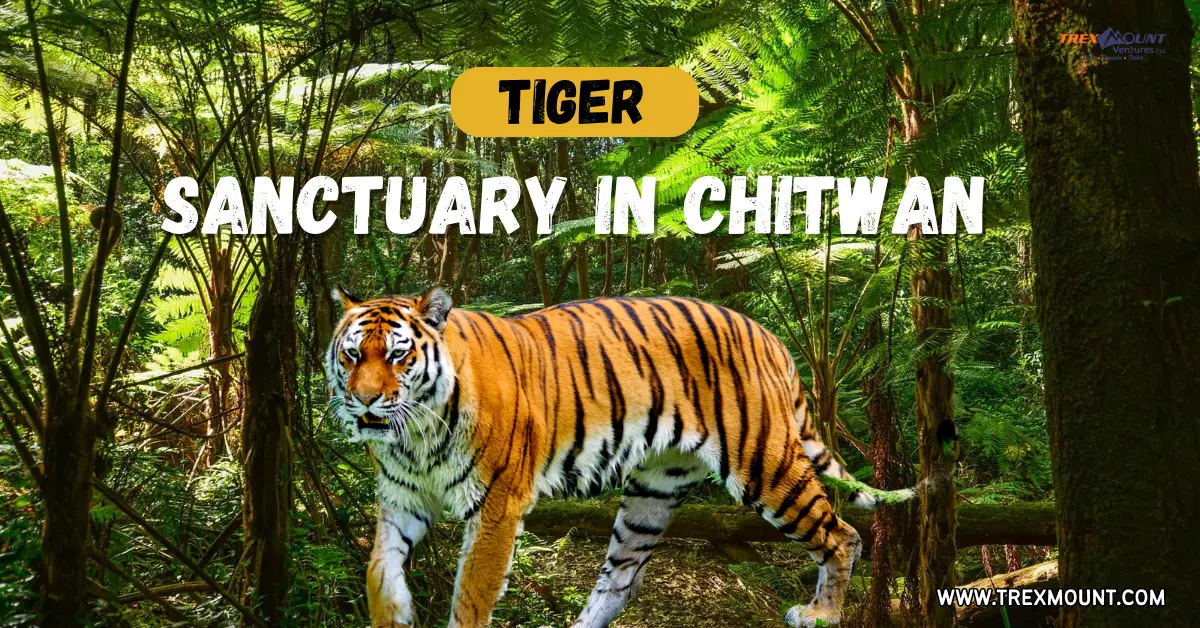










Nepal is planning a new 50-hectare tiger sanctuary in Chitwan to provide a more natural setting for tigers that can no longer safely remain in the wild. The proposed facility is planned at Devnagar, within the buffer zone of Chitwan National Park, and is expected to accommodate up to 20 problem tigers.
The project is being developed not only as a response to human-tiger conflict but also as a potential new ecotourism attraction in Chitwan. According to government officials, the facility will include enclosed areas for tigers, viewing towers, electric fencing, water ponds and other infrastructure designed to allow visitors to observe the animals while maintaining a physical barrier between people and tigers.
The government has allocated Rs 5 crore in the current fiscal year to begin construction. The full project is expected to require substantially more investment and will be developed in three phases.
For travellers interested in wildlife, the development is significant. Chitwan is already one of Nepal's most important wildlife destinations and is internationally known for its Bengal tigers, one-horned rhinoceros, gharials, wild elephants, sloth bears, crocodiles and many bird species. The proposed tiger sanctuary could add another dimension to the region's growing wildlife tourism sector.
The proposed project is a 50-hectare tiger sanctuary at Devnagar, located in the buffer zone of Chitwan National Park.
The facility is intended primarily to manage tigers considered problematic because of their interaction with people or other circumstances that make their continued release into the wild difficult. Two such tigers are already being kept at the Devnagar site.
Government officials say the planned facility could eventually accommodate up to 20 tigers. The intention is to provide these animals with considerably more space and a setting that is closer to natural conditions than conventional holding enclosures.
The project is therefore different from simply constructing another cage or zoo enclosure. The plan involves a much larger area, separate enclosures, forested sections, water ponds and security barriers.
The sanctuary is also expected to have facilities for controlled wildlife viewing. Visitors could observe the tigers from viewing towers, a close bridge or vehicles operating within designated areas.
One of the most important principles described by officials is the separation of people and tigers. The structures will be designed so that visitors remain within protected areas while the tigers stay outside those visitor spaces.
The project is still in the development stage. The initial government funding is intended to start construction, while officials have acknowledged that completing the entire project will require considerably more investment.
Nepal has made significant progress in tiger conservation over the past several decades. The country has worked to protect tiger habitat, reduce poaching and strengthen wildlife management across the Terai.
However, successful tiger conservation also creates a difficult management challenge.
As tiger populations recover and protected habitats become more valuable, interactions between people and tigers can become more complicated. Chitwan and other tiger landscapes are not isolated from human settlements. Communities live around protected areas, agriculture takes place near forest boundaries, livestock may enter or approach wildlife habitats, and people regularly travel through landscapes where wild animals move.
Most wild tigers avoid people. But individual animals can become involved in repeated conflict.
A tiger may attack livestock, enter areas close to settlements or, in serious cases, injure or kill people. Injured, old or otherwise compromised tigers can also behave differently from healthy wild animals.
When authorities capture such animals, simply releasing them somewhere else is not always a practical solution.
That creates the need for facilities where individual tigers can be managed safely.
Nepal currently has 19 problem tigers being kept in enclosures nationwide, according to the Department of National Parks and Wildlife Conservation spokesperson quoted in the report. Seven of those tigers are in Chitwan.
The proposed sanctuary is intended to address this problem by providing a larger and more natural environment for such animals.
Instead of keeping every animal in a small enclosure, the proposed model would provide separate areas with vegetation, limited forest habitat and water sources.
The phrase "problem tiger" does not mean that a tiger is naturally dangerous or aggressive.
It generally refers to an individual animal that has become involved in serious or repeated conflict with people, livestock or human settlements, or one that cannot safely be returned to the wild. This distinction matters.
Tigers are wild predators. Their behaviour is shaped by territory, prey availability, competition, injury, age and interaction with their surroundings. When a tiger repeatedly approaches human settlements or attacks people, wildlife authorities may need to intervene.
In some situations, the tiger can be captured and relocated or eventually returned to a suitable habitat.
In other cases, release may not be considered safe.
A sanctuary provides another option.
The proposed Chitwan facility would allow authorities to keep these animals under controlled conditions while giving them considerably more space than a conventional holding facility.
This could benefit both sides of the human-wildlife conflict:
The sanctuary therefore has the potential to become a management facility as well as a conservation and tourism site.
The proposed sanctuary is planned at Devnagar in Chitwan, within the buffer zone of Chitwan National Park.
This location is important because Chitwan is already one of Nepal's most established wildlife destinations.
Chitwan National Park is Nepal's oldest national park. It was established in 1973 and later became a UNESCO World Heritage Site in 1984. The park covers approximately 932 square kilometres and protects a large area of forests, grasslands and wetlands in the country's southern lowlands.
The park's ecosystem supports a wide range of wildlife, including the Bengal tiger.
Its location in the Terai also makes it substantially different from Nepal's Himalayan trekking destinations.
Visitors who travel to Chitwan are not looking for high-altitude mountain trails. They come for forests, rivers, grasslands, wildlife, birdwatching, canoe trips, jungle activities and the opportunity to see animals in their natural environment.
The proposed sanctuary could fit into this existing tourism structure.
Chitwan has played a major role in Nepal's tiger conservation history.
Tiger conservation research in Chitwan dates back decades. The National Trust for Nature Conservation notes that Nepal's tiger conservation work began with the Tiger Ecology Project launched in Chitwan in 1972.
The region provides important habitat for Bengal tigers and has become one of the best-known tiger landscapes in South Asia.
The wider Chitwan ecosystem includes forests, rivers, wetlands and grasslands that support both predators and prey species.
This ecological relationship is important.
A tiger cannot survive simply because a forest exists. It needs prey, water, territory and sufficient habitat. Chitwan's wildlife ecosystem includes species such as chital, sambar, wild boar and other animals that form part of the food chain supporting large predators.
Conservation therefore involves more than protecting the tiger itself.
It involves protecting the ecosystem around it.
The proposed sanctuary is planned around several types of infrastructure.
According to government officials, the project will include:
The sanctuary will have separate enclosed areas for individual tigers.
This is important because tigers are territorial animals. Keeping multiple tigers together without appropriate management could create serious risks.
The proposed design therefore allows individual animals to have designated areas.
The plan includes limited forest areas within the sanctuary.
This is intended to make the environment more natural than a basic concrete or metal enclosure.
Vegetation can provide shade, cover and environmental enrichment for the animals.
Electric fencing is planned as part of the security system.
The purpose is to prevent tigers from escaping and to protect people and other animals around the facility.
Officials have said that the enclosures will use two layers of barriers.
This creates an additional safety zone between the tigers and visitors.
The principle is straightforward: the tiger remains in its designated enclosure, while people remain in protected areas.
Water ponds are also included in the development plan.
Water is an important component of a natural-looking tiger environment and can also help create conditions that are closer to the animal's normal habitat.
The sanctuary is expected to include viewing towers where visitors can observe the tigers.
This could eventually become one of the main tourism features of the facility.
A "close bridge" is also planned as a controlled viewing structure.
The idea is to allow visitors to see the animals from a closer but protected position without entering the tiger's enclosure.
Visitors may also be able to observe tigers from vehicles inside a designated open enclosure.
This concept would create an experience somewhat different from conventional zoo viewing.
The emphasis is on controlled wildlife observation rather than direct contact with the animals.
Safety will be one of the most important components of the project.
Tigers are powerful wild predators. Even an animal that appears calm can react quickly to movement, noise or unexpected situations.
The proposed facility therefore places physical barriers between people and the animals.
Officials have described a design where visitors remain inside protected structures or vehicles while the tigers remain outside those visitor areas.
This approach could allow visitors to observe tigers without creating unnecessary contact.
The proposed security system includes:
The exact visitor rules, operating procedures, opening date and ticketing system have not yet been announced in the report.
Travellers should therefore not treat the proposed sanctuary as an attraction that is already open.
At present, it is a planned development.
The project is expected to begin construction during the current fiscal year after the government allocated Rs 5 crore for the initial work.
However, the complete sanctuary is not expected to appear all at once.
Officials have said the project will be developed in three phases.
That means construction and development are expected to happen progressively.
The initial funding is intended to get the project started, but government officials have also indicated that the full project will require substantial additional investment.
As a result, an exact opening date for tourists cannot currently be confirmed.
This is an important point for travellers planning a Chitwan trip.
If you are visiting Chitwan soon, the existing national park and established wildlife activities remain the main attractions. The new tiger sanctuary should be viewed as an upcoming development rather than an already operational tourist site.
The planned facility is expected to accommodate up to 20 tigers.
That number is significant because Nepal currently has 19 problem tigers being held in enclosures across the country, with seven in Chitwan.
The sanctuary could therefore provide a dedicated long-term management option for a considerable proportion of these animals.
However, capacity should not be confused with a target population.
The sanctuary is not being planned to breed 20 tigers or create a new wild tiger population.
Its main purpose is to provide a managed environment for individual tigers that cannot safely remain in the wild.
That distinction is important when discussing the project as a conservation initiative.
Not exactly.
The proposed sanctuary should not be understood as a replacement for wild tiger habitat.
A protected forest where tigers hunt naturally is fundamentally different from a managed sanctuary.
Wild tiger conservation depends on maintaining large connected landscapes where animals can move, hunt, reproduce and establish territories.
The proposed 50-hectare sanctuary has a different purpose.
It is primarily a management facility for problem tigers.
Its value comes from providing an alternative for animals that cannot be released safely.
This can complement wild tiger conservation rather than replace it.
Nepal's wider tiger conservation work continues to depend on protected areas, habitat protection, prey populations, anti-poaching efforts and cooperation with communities living around wildlife habitats.
The story of the tiger in Nepal has changed dramatically over the past several decades.
Tigers once faced severe pressure from hunting, habitat loss and poaching.
The creation and expansion of protected areas helped provide safer habitat.
Nepal's protected-area network now includes several important tiger landscapes, particularly across the Terai.
Chitwan National Park is one of the best-known, while Bardiya National Park, Banke National Park, Parsa National Park and Shuklaphanta National Park also contribute to tiger conservation.
Tiger conservation has also increasingly involved communities.
This is essential because protected areas do not exist in complete isolation.
People live around parks and use surrounding landscapes for agriculture, livestock, forestry and other activities.
Human-tiger conflict can therefore become a major conservation issue.
The challenge for Nepal is not simply to increase tiger numbers.
It is to maintain healthy tiger populations while also ensuring that people living around tiger habitats can live safely.
The proposed sanctuary addresses one part of this wider challenge.
The Bengal tiger is the tiger population found in Nepal's Terai landscapes.
Scientifically, it belongs to the species Panthera tigris. It is one of the most recognisable large carnivores in Asia.
In Nepal, the Bengal tiger is strongly associated with lowland protected areas such as Chitwan and Bardiya.
Chitwan's forests and floodplain habitats provide suitable conditions for tigers and their prey. The park is also known for its population of greater one-horned rhinoceros, another flagship species of Nepal's Terai.
The Bengal tiger is more than a tourist attraction.
As an apex predator, it occupies an important position in the ecosystem.
Its presence reflects the health and connectivity of the broader habitat.
Protecting tigers therefore requires protecting the prey species, forests, wetlands, rivers and grasslands that support them.
Human-tiger conflict is one of the most complicated issues facing tiger conservation.
A healthy tiger population is a conservation success.
But if individual tigers repeatedly enter settlements or attack people, local communities may become less willing to tolerate them.
This can create a difficult situation for conservation authorities.
A tiger that repeatedly causes conflict cannot always be released in another location. Moving the animal somewhere else may simply transfer the problem to another community.
At the same time, permanently keeping tigers in small cages is not an ideal long-term solution.
The proposed sanctuary attempts to address this gap.
It could give authorities a larger, controlled environment in which to keep tigers that cannot safely return to the wild.
For conservation, that creates another management option.
For local communities, it may reduce the pressure associated with dangerous individual animals.
Potentially, yes, but it should not be considered a complete solution.
The sanctuary could help by providing a permanent or long-term location for individual tigers that are considered unsafe to release.
That could reduce the need to keep such animals in smaller holding facilities.
However, human-tiger conflict occurs at the landscape level.
A sanctuary cannot prevent every tiger from entering a settlement.
It cannot replace habitat management.
It cannot eliminate livestock depredation.
It cannot stop people from entering forests.
And it cannot replace community-based conservation.
Reducing conflict requires several measures working together.
These may include:
The proposed sanctuary should therefore be viewed as one part of a larger conservation strategy.
Yes. That is one of the explicit objectives associated with the project.
The proposed facility is intended not only to manage problem tigers but also to create a new ecotourism attraction.
This makes sense in the context of Chitwan.
The region already attracts domestic and international visitors interested in wildlife.
A typical Chitwan experience can include:
Chitwan National Park is already promoted as a destination for observing wildlife, including the Bengal tiger. Nepal Tourism Board describes the park as a major wildlife destination covering 932 square kilometres and highlights its wildlife and jungle experiences.
A dedicated tiger sanctuary could add another activity to this tourism network.
However, its tourism value will depend heavily on how it is designed and managed.
If visitor access is carefully controlled and animal welfare remains the priority, the facility could provide an educational wildlife experience.
The planned infrastructure suggests several possible viewing experiences
.
Visitors could watch tigers from elevated platforms.
This would provide a wider field of view while maintaining a physical barrier.
The proposed close bridge could provide a closer observation point.
This may become an attractive feature for photographers and wildlife enthusiasts, provided that visitor numbers and animal welfare are properly managed.
Vehicles could potentially enter a designated open enclosure where visitors could observe tigers from inside the vehicle.
This could create a safari-style experience.
However, the exact visitor regulations have not yet been announced.
It is too early to say how long visitors will be allowed to stay, how many vehicles will enter at once, what photography rules will apply or how much tickets will cost.
Those details should be confirmed by the relevant authorities once the facility becomes operational.
These two experiences should not be confused.
Chitwan National Park is a large protected ecosystem where wild animals live in their natural environment.
The proposed tiger sanctuary would be a managed facility for individual tigers that cannot safely remain in the wild.
These two experiences should not be confused.
A visitor who wants to experience wildlife in its natural environment should still consider the national park the primary destination.
The sanctuary could provide a different type of wildlife experience once it opens.
The project could strengthen Chitwan's position as one of Nepal's leading wildlife tourism destinations.
Chitwan already has an established tourism industry involving hotels, jungle guides, safari operators, transport providers, restaurants and cultural experiences.
A new tiger-focused attraction could encourage visitors to spend additional time in the area.
That could potentially benefit local businesses.
For example, a traveller who originally planned a two-night wildlife stay might find additional reasons to extend the visit if the sanctuary offers a high-quality visitor experience.
The impact could extend beyond the sanctuary itself.
More visitor activity can create demand for:
However, tourism growth must be balanced with environmental responsibility.
A tiger sanctuary should not become a high-volume entertainment facility at the expense of animal welfare.
Ecotourism can create a financial reason to protect wildlife.
When visitors travel to a destination specifically to see wildlife, the animals and ecosystems become part of the local tourism economy.
This can create incentives for conservation.
But ecotourism only works well when the benefits are distributed responsibly and tourism pressure is controlled.
For a tiger sanctuary, this could mean:
The proposed viewing towers, close bridge and vehicle system could make wildlife observation possible without allowing direct contact between visitors and tigers.
That separation should remain central to the visitor experience.
The government has allocated Rs 5 crore during the current fiscal year to begin construction of the project.
This is an initial allocation rather than the stated total cost of the entire sanctuary.
Officials have said the full project will require substantial investment.
The development will take place in three phases.
This suggests that the initial budget is intended to begin the infrastructure development rather than complete all components immediately.
The total final cost, construction timeline and individual phase budgets have not been provided in the Himalayan Times report.
Travellers and tourism businesses should therefore avoid treating the Rs 5 crore figure as the final project budget.
Developing a 50-hectare wildlife facility requires more than building an enclosure.
The project has to incorporate animal management, visitor infrastructure, security, water systems, fencing and environmental considerations.
The three-phase approach allows the government to develop the facility progressively.
According to the reported plan, the project will include:
The existing holding centre is expected to form part of the wider facility.
The phased approach may also allow authorities to assess how the facility operates before expanding it further.
Two problem tigers are currently being kept at the Devnagar location where the proposed sanctuary is planned.
These animals are therefore already part of the site's current wildlife-management function.
The proposed development would expand and improve the facility around them.
Rather than creating a completely new site elsewhere, the government is planning to develop the existing location into a much larger sanctuary.
That provides a practical starting point for the project.
A tiger is a large, territorial predator that naturally moves through substantial areas while hunting and establishing territory.
A small enclosure cannot replicate a wild habitat.
However, a larger semi-natural environment can provide more opportunities for movement, shade, environmental enrichment and natural behaviours.
This is one of the important reasons the proposed 50-hectare area matters.
The sanctuary is not intended to recreate an entire national park.
Instead, it is designed to provide a more natural setting for animals that cannot be safely released.
The inclusion of forest sections and water ponds is particularly relevant to this goal.
The main focus is clearly the management of problem tigers.
However, the project could have broader implications for wildlife conservation.
It could become a place where visitors learn about:
This educational role could be particularly valuable.
Many tourists see a tiger as a spectacular animal but may not understand the complicated conservation work required to maintain a wild population.
A well-designed sanctuary could help bridge that gap.
Nepal's tiger conservation story is part of a broader regional effort to protect one of Asia's most iconic predators.
The country has invested in protected areas, wildlife monitoring, anti-poaching measures and community participation.
The National Trust for Nature Conservation lists tiger-related work across several landscapes, including Chitwan, Bardia and other areas where tiger conservation and human-tiger coexistence are priorities.
The challenge is becoming increasingly complex.
Conservation success means more tigers surviving.
More surviving tigers can mean more competition for territory.
And when tiger habitat overlaps with human-used landscapes, conflict can occur.
This makes the management of individual problem animals increasingly important.
A dedicated sanctuary could give wildlife authorities another tool to address that challenge.
If you are planning a Chitwan trip, the proposed sanctuary is worth following, but it should not change your immediate travel plans.
Chitwan already offers a complete wildlife experience.
Visitors can explore the national park and surrounding areas through established tourism activities.
The Bengal tiger is one of the animals visitors hope to encounter, although seeing a wild tiger can never be guaranteed.
Wildlife sightings depend on animal behaviour, weather, season, habitat conditions and simple chance.
That is part of the nature of a real wildlife experience.
The proposed sanctuary would offer something different.
Instead of waiting for a wild tiger to appear during a jungle safari, visitors could potentially observe tigers within a controlled facility once the project becomes operational.
This could make it easier for travellers who specifically want to see a tiger.
But it should complement, not replace, the experience of exploring Chitwan's natural ecosystem.
As wildlife tourism grows, responsible behaviour becomes increasingly important.
Visitors should remember that wild animals are not performers.
A tiger does not need to appear on demand.
Travellers should never:
In a proposed sanctuary, following official visitor rules will be equally important.
If the facility eventually opens to tourists, visitors should follow all instructions relating to viewing distances, vehicle movement, photography and noise.
It could.
Wildlife tourism already contributes significantly to the tourism economy in Chitwan.
A new attraction could potentially increase visitor numbers or encourage longer stays.
The benefits could reach communities and businesses beyond the sanctuary itself.
For example, tourists may combine a sanctuary visit with:
This creates opportunities to build longer and more diverse Chitwan itineraries.
For a trekking and travel company, Chitwan can also work as a complementary destination after a Himalayan trek.
A traveller who spends several days trekking in Nepal's mountains can continue to the lowlands for a completely different environment.
The contrast between the Himalayas and the Terai is one of Nepal's strongest tourism advantages.
The proposed facility should not be confused with a large-scale tiger reserve.
The plan is for a 50-hectare sanctuary designed to manage problem tigers.
Chitwan National Park itself is the much larger protected ecosystem where wild tigers live.
Using terms such as "tiger reserve" can therefore create confusion.
The proposed sanctuary is better understood as a managed facility within the broader Chitwan wildlife landscape.
There is already substantial information about the proposal, but many practical details remain unavailable.
These details should become clearer as construction progresses.
The success of the sanctuary will depend on more than its size.
Several factors will matter.
The animals must remain the primary consideration.
The facility should provide enough space, shade, water, enrichment and appropriate care.
The barrier system must prevent escapes and accidental contact.
Wildlife professionals must be responsible for feeding, veterinary care, monitoring and animal behaviour.
Visitor numbers should be managed so that tourism does not disturb the tigers.
The facility should explain why these tigers are there and how human-wildlife conflict occurs.
Local communities should benefit from the tourism activity generated by the project.
Where possible, tourism revenue should contribute to wildlife management and conservation.
It is also important to look at the challenges.
A sanctuary can become problematic if it is treated mainly as an entertainment venue.
Too many visitors, poor enclosure design, inadequate animal care or excessive noise could negatively affect the animals.
Another challenge is funding.
The government has provided Rs 5 crore to begin construction, but officials have already indicated that the full project will require substantial additional investment.
Long-term funding will be necessary for:
A wildlife facility cannot be considered successful simply because its construction is completed.
Its long-term operation will determine its actual conservation value.
The proposed sanctuary represents a shift in how Nepal may manage tigers that cannot return safely to the wild.
For decades, wildlife conservation has focused heavily on protecting natural habitat and increasing wild populations.
Those priorities remain essential.
But as tiger conservation becomes more successful, authorities also need solutions for individual animals involved in serious human-wildlife conflict.
The proposed sanctuary could provide one such solution.
At the same time, it could strengthen Chitwan's wildlife tourism offering.
If managed properly, visitors could learn about tigers while observing them in a controlled environment.
The facility could also demonstrate the complicated reality of conservation: protecting wildlife sometimes means dealing with difficult cases involving individual animals.
Chitwan has long been one of Nepal's most important wildlife destinations.
Its forests, grasslands, rivers and wetlands already attract travellers from around the world.
The Bengal tiger is among the most important species associated with the region.
The proposed 50-hectare sanctuary could add a new layer to that experience.
Visitors may eventually be able to watch problem tigers from viewing towers, a close bridge or vehicles while remaining protected behind barriers.
But the project's importance goes beyond tourism.
At its core, the sanctuary is being planned to address a real conservation and wildlife-management problem.
Nepal currently has problem tigers being kept in enclosures across the country, including seven in Chitwan. The proposed facility could provide a larger and more natural environment for some of these animals.
If the project is developed with strong animal welfare standards, professional management, community involvement and responsible tourism practices, it could become an important addition to Nepal's wildlife conservation system.
For travellers, the message is simple: Chitwan's tiger story is changing.
The wild forests of Chitwan will remain the heart of Nepal's tiger conservation, but the proposed sanctuary could provide a new way to manage animals that cannot safely return to those forests.
And once the facility is completed, it could give visitors another reason to explore one of Nepal's most important wildlife destinations.
Nepal is planning a 50-hectare tiger sanctuary at Devnagar in Chitwan. The facility is intended primarily to provide a more natural, controlled environment for problem tigers that cannot safely remain in the wild. It is also expected to become a new ecotourism attraction.
The proposed tiger sanctuary will be located at Devnagar in Chitwan, within the buffer zone of Chitwan National Park.
The planned facility is expected to accommodate up to 20 tigers. Two problem tigers are already being kept at the Devnagar site where the sanctuary is planned.
The main purpose is to manage problem tigers in a more natural setting. Nepal currently has 19 problem tigers being kept in enclosures nationwide, including seven in Chitwan. The sanctuary is intended to provide a larger and more suitable management facility.
A problem tiger is generally an individual that has become involved in serious or repeated conflict with people or human settlements, making it difficult or unsafe to release it back into the wild.
The government has allocated Rs 5 crore in the current fiscal year to begin construction. This is an initial allocation, not necessarily the final cost of the entire project.
The project is intended partly as an ecotourism attraction, and plans include visitor viewing facilities. However, the sanctuary is still under development, so an official tourist opening date and ticketing details have not yet been announced.
The proposed sanctuary is expected to have viewing towers, a close bridge and vehicle-based viewing areas. These facilities are designed to allow visitors to observe the tigers while keeping people and animals separated by barriers.
No. The proposed design is specifically intended to keep visitors in protected areas while tigers remain in their own enclosures. Two layers of barriers and electric fencing are planned as part of the safety system.
No. The proposed sanctuary and Chitwan National Park have different purposes. Chitwan National Park is a large natural ecosystem where wild tigers and other wildlife live. The sanctuary will be a controlled facility primarily for problem tigers.
Yes. The Bengal tiger is one of the major wildlife species found in Chitwan National Park. Chitwan's Terai forests and associated habitats provide important tiger habitat and support a range of prey species.
Chitwan is one of Nepal's most important tiger conservation landscapes. Tiger conservation research in Nepal has a long history in Chitwan, including the Tiger Ecology Project launched in 1972.
An exact opening date has not yet been announced. Construction is expected to begin during the current fiscal year, and the project will be developed in three phases.
No. The sanctuary is a planned development. The Devnagar site already holds two problem tigers, but the proposed 50-hectare facility is still being developed.
It could help by providing a long-term management option for individual tigers that cannot safely return to the wild. However, it will not replace the need to protect natural tiger habitat, prey populations and wildlife corridors.
It could help in individual cases by providing a location for tigers that repeatedly create serious conflict with people. However, broader human-tiger conflict requires habitat management, community participation, monitoring and other conservation measures.
The reported plan includes separate tiger enclosures, limited forest areas, electric fencing, viewing towers, water ponds, a close bridge and facilities for vehicle-based viewing.
Chitwan National Park covers approximately 932 square kilometres and is Nepal's oldest national park. It was established in 1973 and became a UNESCO World Heritage Site in 1984.
Yes, Chitwan is a major destination for tiger and wildlife observation. However, seeing a wild tiger is never guaranteed because sightings depend on animal behaviour, habitat, weather, season and chance.
The sanctuary is not yet open, so it should not currently be the sole reason to plan a Chitwan trip. Chitwan already offers wildlife safaris, jungle activities, birdwatching and cultural experiences. Once the new facility opens, it could become an additional attraction.
Not necessarily. The proposed facility is being designed specifically to manage problem tigers in a more natural setting, with forest areas, water ponds and large enclosures. Its stated purpose is wildlife management and conservation alongside ecotourism.
Devnagar already has a holding centre where two problem tigers are being kept. Developing the sanctuary there provides an existing location around which the larger facility can be constructed.
That has not been confirmed. Nepal currently has 19 problem tigers in enclosures nationwide, seven of them in Chitwan, while the proposed sanctuary is expected to have a capacity of up to 20 animals. The final decisions regarding individual tiger transfers have not been announced.
Water is an important part of a tiger's environment. Including ponds can provide drinking and bathing opportunities while also helping create a more natural enclosure environment.
The sanctuary could eventually provide a controlled opportunity to observe tigers while also explaining the conservation challenges surrounding them. Combined with Chitwan National Park's existing wildlife experiences, it could further strengthen Chitwan's position as a major wildlife destination in Nepal.
The main purpose is to manage problem tigers in a more natural and controlled environment, while also developing a new ecotourism attraction in Chitwan.

Welcome to Trexmount Ventures !