 Trexmount Ventures
Trexmount Ventures
Trexmount Ventures

Popular Searches
Ready to plan your next getaway? Let’s connect and create something incredible together.
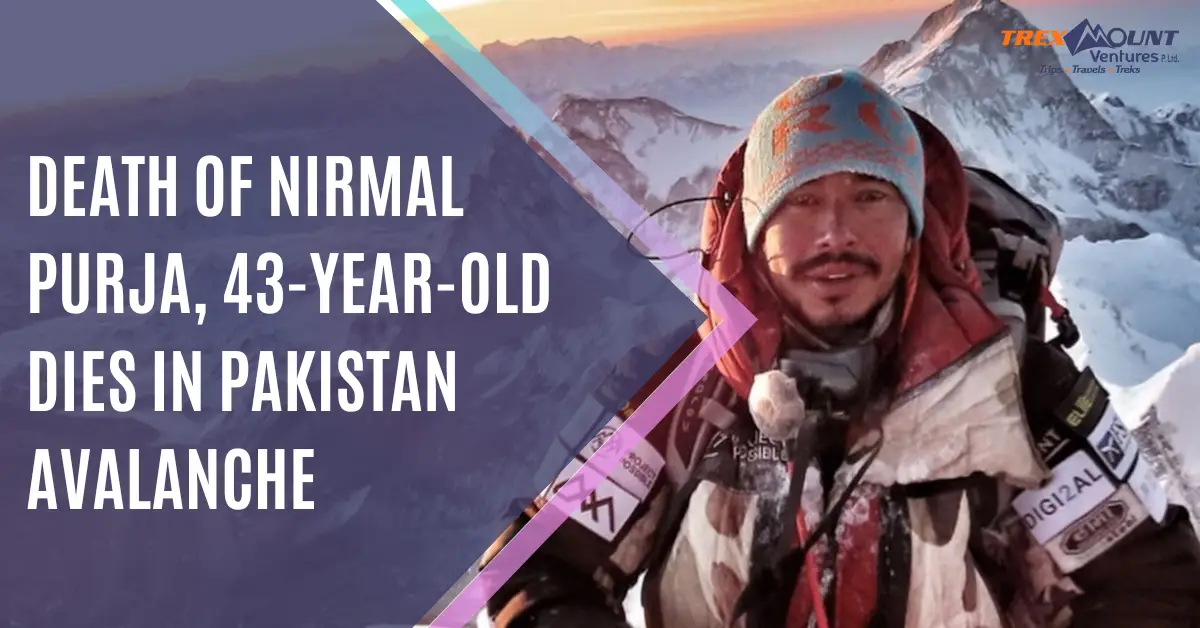





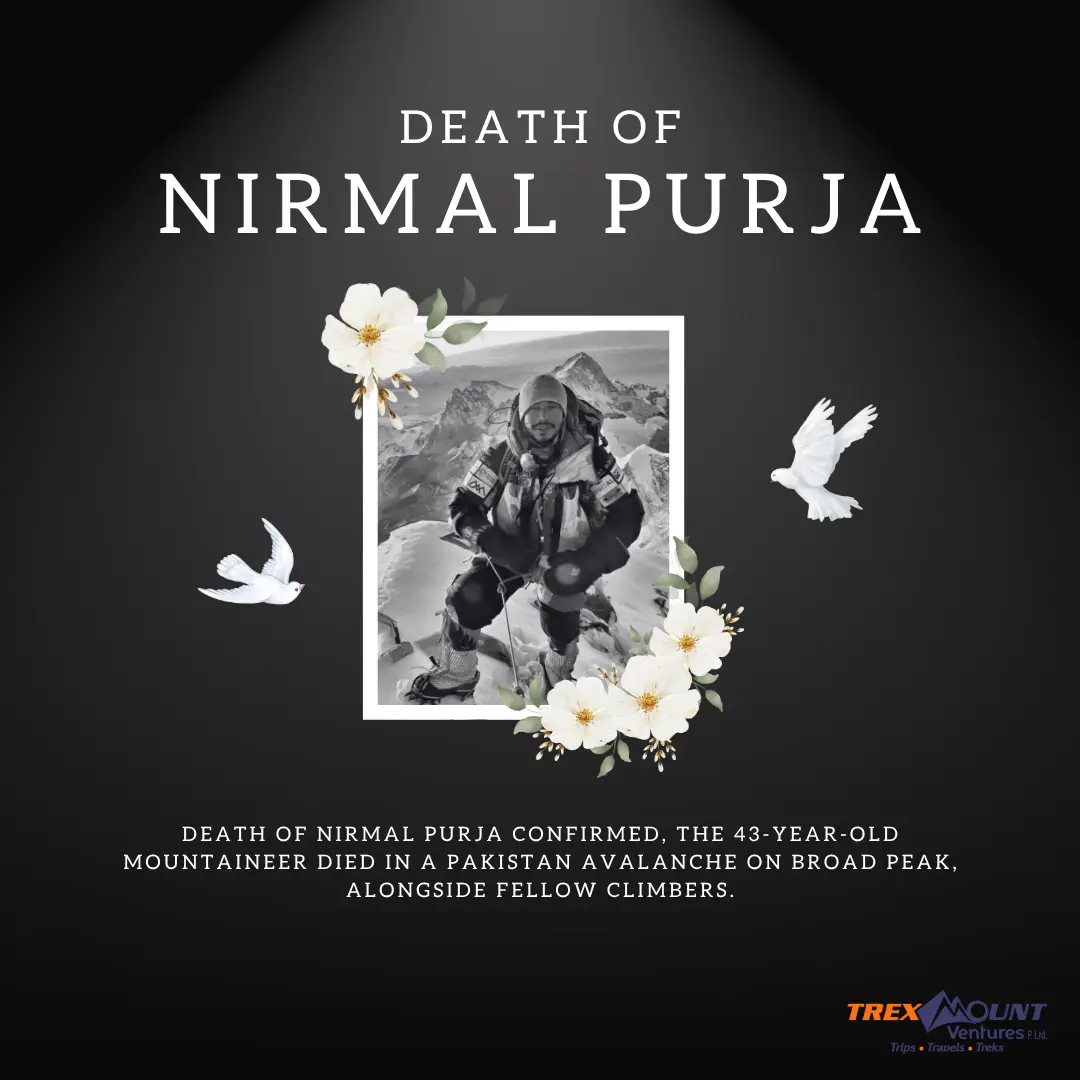
The Death of Nirmal Purja has left the mountaineering world in mourning. The 43-year-old climber, known as Nimsdai, lost his life along with nine fellow climbers after a devastating Pakistan Avalanche struck Broad Peak on August 1, 2026.
Purja's expedition company, Elite Exped, confirmed the tragedy in an emotional statement, calling him a leader who inspired millions.
For everyone who followed his journey, one truth remains: giving up is not in the blood he carried, and that spirit is why his story still moves us, even in grief.
Nirmal Purja died after an avalanche swept through his ten-member expedition team on Broad Peak, an 8,051-metre mountain in Pakistan's Gilgit-Baltistan region, on August 1, 2026.
The expedition had been climbing during a period when heavy recent snowfall had already pushed several other teams off the mountain. Purja's group pressed on, and the slope gave way without warning.
Search teams recovered the first bodies within a day of the avalanche, while others remained buried under difficult terrain for longer. Officials from Gilgit-Baltistan's tourism department said drone surveillance helped locate victims even before recovery was possible.
Nirmal Purja is the climber who became world-famous for completing an astonishing mountaineering feat, though his historic project was completed with supplemental oxygen on most peaks, not entirely without it.
Purja's record stood until 2023, when it was surpassed by another climber. Even so, his speed, endurance, and refusal to quit redefined what mountaineers believed was physically achievable.
Purja often said that giving up is not in the blood of a true climber, a philosophy that became his personal mantra. He carried that belief through brutal weather, oxygen-thin altitudes and repeated near-death moments, always choosing to push forward rather than retreat.
Following his death, Nirmal Purja's work now lives on through the organizations and people he built around his mission, rather than through the man himself.
Colleagues have said his foundation's mission, spotlighting the contribution of Sherpa climbers, will remain central to how the organization operates going forward.
Yes, Nims Purja has been found. Rescue teams located his body along with several other climbers, though recovery from the difficult terrain took several days.
Rescue workers described the recovery as slow and dangerous, given the risk of secondary avalanches in the area. Helicopters and drone surveillance played a central role in locating the climbers before ground teams could safely reach them.
Climbers, government officials and everyday trekkers from around the world have shared messages honoring Purja's courage, humility and the belief that ordinary people can achieve extraordinary things.
For trekking communities everywhere, the Death of Nirmal Purja is a painful reminder of how unpredictable the mountains can be, even for the most experienced climbers alive.
At Trexmount Ventures, we believe every trekker deserves to chase their own mountain safely. If Nims Purja's journey has inspired you to take your first step into trekking or climbing, our experienced guides can help you plan a safe, well-prepared expedition built on the same spirit he lived by. Reach out to Trexmount Ventures today to start planning your next adventure with a team that puts your safety first.
Nirmal Purja died after an avalanche struck his ten-member expedition team on Broad Peak in Pakistan on August 1, 2026. He was leading the climb when the slope gave way, and his body was later located and recovered by rescue teams following a difficult multi-day operation in the Karakoram range.
Nirmal Purja was 43 years old at the time of his death. He passed away during an expedition on Broad Peak, one of the world's fourteen 8,000-metre peaks, in Pakistan's Gilgit-Baltistan region on August 1, 2026, alongside nine fellow climbers.
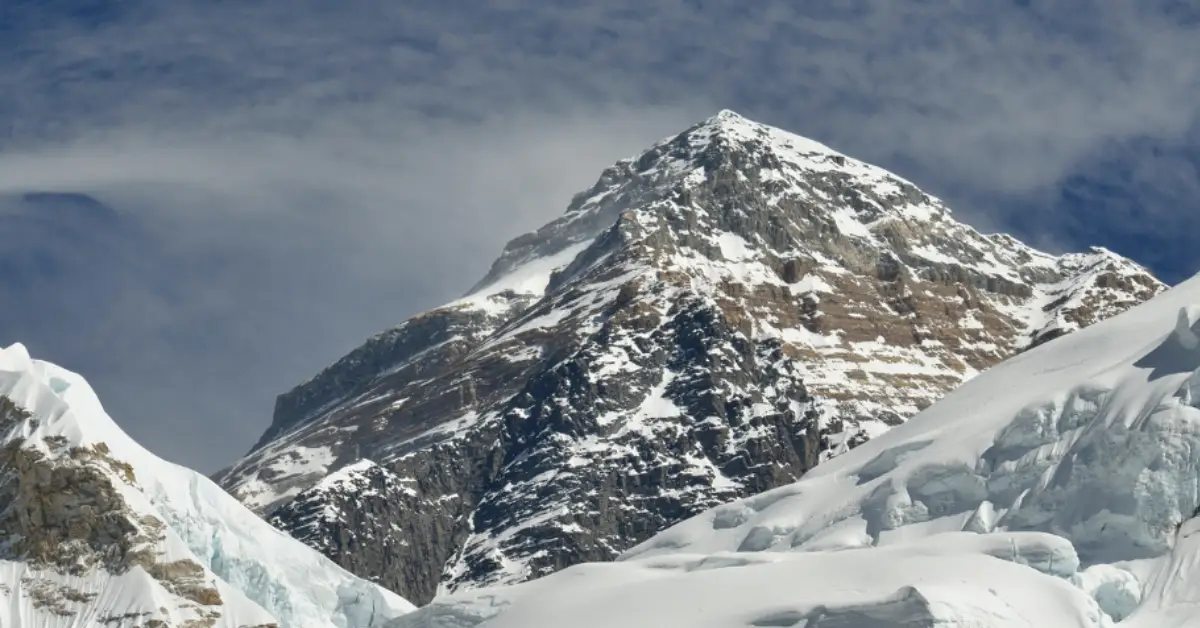
He was climbing Broad Peak, the world's twelfth-highest mountain at 8,051 metres, located in Pakistan's Karakoram range. The expedition was struck by an avalanche while attempting the summit, and Purja was leading the ten-member international climbing team.
Yes, rescue teams confirmed and recovered Purja's body along with several other climbers. Military helicopters and ground crews conducted the operation over multiple days due to harsh weather and difficult terrain, while drone surveillance helped identify victim locations beforehand.
All ten members of the expedition, including Purja, were confirmed dead after the avalanche. The climbers came from Nepal, Oman, the United States, Pakistan and China, making it one of the deadliest single incidents in recent high-altitude mountaineering history.
Purja was famous for climbing all fourteen of the world's 8,000-metre peaks in just six months in 2019, a record that shattered the previous mark. His journey was documented in the Netflix film "14 Peaks: Nothing Is Impossible," which introduced him to a global audience.
Yes, before his climbing career, Purja served for a decade in the United Kingdom's Special Boat Service, an elite special forces unit comparable to the US Navy SEALs. That background shaped the discipline and resilience he later brought into high-altitude mountaineering.
The Nimsdai Foundation is an organization Purja founded in 2022 to support Sherpa communities and mountain safety initiatives. Following his death, the foundation confirmed it would continue his mission, honoring not only his life but every climber lost in the Broad Peak tragedy.
This phrase reflects Purja's personal philosophy and approach to climbing. He consistently pushed through extreme conditions, oxygen-thin altitudes and setbacks throughout his career, and this mindset became closely associated with his identity as one of mountaineering's most determined athletes.
No, Purja's original record of fourteen 8,000-metre peaks in six months was surpassed in 2023 by another climber. Despite losing the record, his achievement remains widely regarded as one of the most influential moments in modern mountaineering history.
Welcome to Trexmount Ventures !